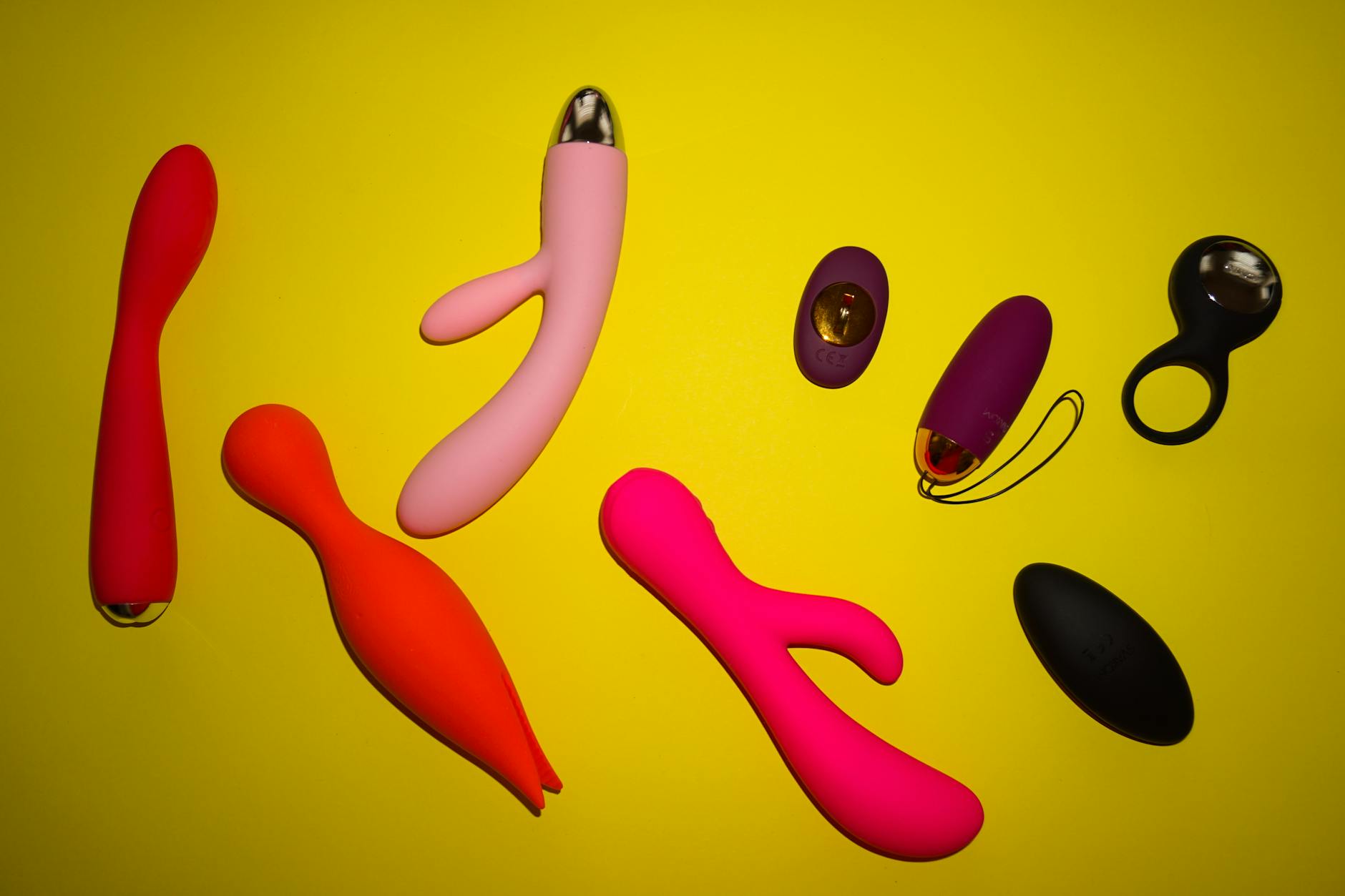
How to Use Lemon Clitoral Vibrators With a Reactive Partner
Let's be real: your partner thinks you want a toy because they're not enough. That's the fear underneath the defensiveness, the jokes, the "I thought you liked what I do" comment. And that fear needs to be named and addressed before you ever unbox a lemon vibrator. Otherwise, you'll be managing their emotions instead of enjoying yours.
Here's the thing. Introducing a clitoral vibrator to a reactive partner isn't a logistics problem. It's a communication problem. And it's completely solvable if you approach it right.
Why partners get defensive about toys (and it's not what you think)
It's not really about the toy. It's about what the toy seems to say. A partner with reactive patterns hears "I need a vibrator" as "I need something you can't give me." And when you're already managing relationship tension, that feels like proof of something broken.
Here's what's actually happening neurologically. Your partner's brain is running a threat assessment. You're introducing a change to something intimate, and their nervous system reads that as potential rejection or inadequacy. That's a very human response, even if it doesn't feel fair to you.
The research on couples and sex toys is clear. When the introduction is framed as addition (more pleasure together) instead of replacement (I need something better), resistance drops dramatically. Context matters more than the object.
The conversation framework that changes minds
Timing is everything. Don't bring this up during sex or right after. Don't spring a toy on them. Pick a calm moment, neutral ground, maybe over coffee. Here's the scaffolding that works.
Open with honesty about your body, not about them. "I've been reading about how my body responds to clitoral stimulation, and I'm realizing I might enjoy exploring that differently. I'm bringing this to you because I want us to explore it together." Notice you're talking about you and your pleasure, not their performance.
Name the fear directly. "I know toys can feel like a threat, and I want to talk about that head-on. A vibrator isn't a replacement. It's a tool that helps my body respond differently, which actually means better sensations for both of us." Saying it out loud is permission for them to feel it without acting it out as defensiveness.
Make it collaborative. "I'd love your input. Do you want to choose it together? Do you want to read about how it works first?" You're inviting them into the decision, not deciding for them.
Show the research. Sometimes partners need data. Something like, "Clitoral vibrators actually help people be more present during partnered sex because we're not in our head trying to orgasm." Facts land differently than feelings.
The setup that matters most
Once they're on board (or at least not actively resisting), how you introduce the actual tool shapes everything.
Start without the toy in the room. Seriously. Have a conversation about what you want from this. Do you want to use it during solo play or partnered touch? Do you want them to hold it or you? Should they be hands-on or just present? These conversations are unsexy but they prevent the moment from being awkward or resentment-soaked.
When you do bring out a lemon clitoral vibrator for the first time together, do it outside the bedroom. Let them hold it, feel the weight, see it's a small, ordinary object. Normalize it. "This is the Lem," not "This is the thing that's going to change everything" (even if it will).
Start with your hand on theirs. Not because you need them to operate it, but because it bridges the gap between "me and my toy" to "us using this together." It's a small gesture that signals partnership instead of solo pleasure.
The actual integration (without the power struggle)
Here's where most couples get stuck. One person wants to use the toy, the other wants control over when and how. That's a boundary negotiation, and it needs words.
In solo play, you don't need permission. But telling them you're exploring helps. "I'm going to spend some time with this tonight. It helps me understand what I like, which makes partnered sex better for both of us." This is information, not an invitation to feel excluded.
During partnered touch, the person with the reactive pattern often needs reassurance mid-act. This is normal. You might say things like "I love having you here" or "This helps me feel more, which feels better with you." You're narrating the pleasure together instead of creating a dynamic where the toy is replacing them.
One thing that helps: if your partner is holding or controlling the toy, that often reduces defensive feelings. They're not watching you please yourself. They're participating in your pleasure. The psychological difference is huge.
What changes when the reactivity fades
Most partners come around faster than you think. Usually within the first few partnered sessions. Once they see that you're still present, still interested in them, still asking for their touch alongside the toy, the threat narrative collapses. They realize this isn't about replacement.
Some partners even become enthusiastic. They see you orgasm harder or more reliably, and they actually feel that. That's a powerful reinforcement. Pleasure is contagious.
But some partners stay ambivalent. They're okay with it, not threatened anymore, but they're not into it. That's fine. You can use a lemon clitoral vibrator during solo play and still have great partnered sex without it. The point is to get to a place where the toy is neutral instead of loaded with meaning.
Photo by cottonbro studio on Pexels
The ongoing conversation (after the first time)
Reactive partners often need reassurance to stay unstuck. This doesn't mean you're managing their emotions forever. But for the first month or two, check in. "How was that for you?" "Did you feel okay during that?" You're giving them space to voice concerns before they calcify into resentment.
If they seem withdrawn or quiet after using a toy together, name it. "I'm noticing you seem distant. I want to make sure we're on the same page." Sometimes partners need more verbal affection alongside the physical novelty. That's worth knowing.
Here's what I've seen work: couples who integrate toys successfully are couples who keep talking. The toy isn't the thing that fixes the relationship. The communication around the toy is what fixes it. You're proving to your partner that you can introduce change, manage conflict, and still choose them.
Red flags that indicate a deeper issue
If your partner responds to this conversation with contempt (eye-rolling, name-calling), or if they absolutely refuse to discuss it after you've tried multiple times, that's not a toy problem. That's a relationship problem. A partner who can't engage with your pleasure seriously, or who can't have a vulnerable conversation about vulnerability, is showing you something important about how they handle intimacy more broadly.
Similarly, if you feel like you're walking on eggshells or constantly managing their emotions around your sexuality, that's a sign to work with a couples therapist. You deserve a partner who can grow with you, not one who requires you to shrink.
Most reactive partners are just scared. They can be reassured. But some are controlling, and that's a different issue entirely.
Why this matters beyond the bedroom
How your partner responds to toys tells you something about how they respond to change, to your agency, to your pleasure mattering as much as theirs. A partner who can work through their defensiveness and come out the other side is showing you they can grow. That matters for every stage of your relationship.
Using a lemon clitoral vibrator together isn't about the toy. It's about learning to talk about desire without shame, to introduce novelty without creating threat, and to keep choosing each other even when things change. Those skills translate everywhere.
FAQ
What if my partner refuses to let me use a toy during partnered sex?
That's a boundary issue that needs a conversation outside the bedroom. You might say: "I need this for my own pleasure and sensation. I'm not asking for your permission. I'm asking for your willingness to stay open and present while I explore it." If they continue to refuse, that's worth exploring with a couples therapist, because it usually signals deeper control patterns.
How do I bring this up if we've had past conflicts about sexuality?
Start even smaller. Maybe share an article about lemon vibrators and why they're designed differently (the suction mechanism is less aggressive on sensitive tissue, which is factual). Let them absorb the info without pressure. Then say, "I'm curious about trying something like this. What questions do you have?" Treat it as shared learning, not a demand.
What if they seem okay with it but I can tell they're secretly uncomfortable?
Trust your instinct. After the first time, create space for them to be honest. "I noticed you seemed quieter than usual. I want you to know it's totally fine to say this doesn't work for you right now." Sometimes partners need permission to admit discomfort, and that permission actually reduces the discomfort.
Can a toy fix a relationship with low sexual frequency or desire?
No. A toy can't fix a broken dynamic. But it can restart a conversation about pleasure when the current conversation has stalled. If your partner has withdrawn from sex entirely, that's a deeper issue that needs more than a vibrator. You might need a couples therapist to get underneath what's really going on.
How long does it usually take for a reactive partner to get comfortable?
Most partners come around within 2-4 weeks of regular partnered use. Once they realize you're still present, still interested in them, still asking for their touch, the defensiveness usually fades. Some take longer. Some never fully warm up but become neutral instead of resistant, which is acceptable compromise.
What's the difference between reactive and controlling?
A reactive partner is scared. They're protecting themselves from what feels like rejection. They can usually move through that with reassurance and communication. A controlling partner uses reactions to manage you. They stay defensive or punishing even after you've addressed the concern. If your partner's discomfort never resolves no matter what you do, that's a sign of a different, more serious problem.
Introducing a lemon clitoral vibrator to a reactive partner isn't about the tool. It's about proving you can navigate change together, that your pleasure matters, and that desire can evolve without threatening the bond. Most partners can get there. The ones who can't are showing you something important about the relationship itself.