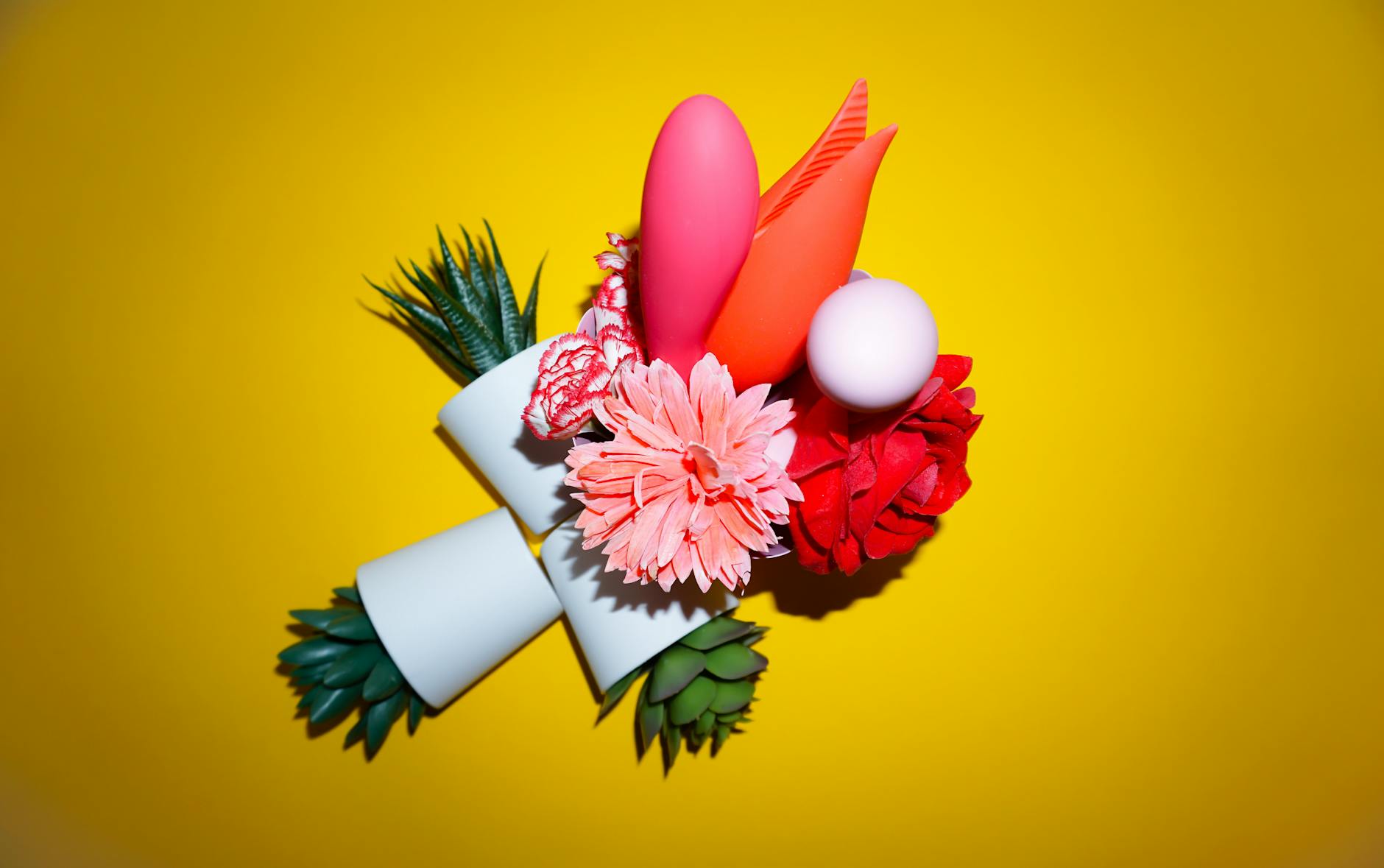
Let's start with the obvious lie
You've been told that solo pleasure is something you do when you can't get partnered sex. That it's a consolation prize. A backup plan. Something to feel a little embarrassed about when someone finds out.
That's backwards. Here's what actually matters: solo pleasure is the only way you ever find out what your body actually wants. Without it, you're navigating intimacy blind.
Why shame lives in this space
For anyone with a vulva, the messaging has been relentless. Pleasure is for men. Women's sexuality is supposed to be responsive, reactive, oriented toward someone else's desire. If you're exploring your own, you're being selfish. If you're doing it frequently, you're broken. If you're doing it instead of being with a partner, you're rejecting them.
None of that is true, and all of it sticks around in your nervous system whether or not you consciously believe it.
The result is that people come to solo pleasure with a baseline of conflict. Your body wants it. Your brain is narrating shame. And that internal argument burns energy that could go toward actual sensation.
The clinical case for solo exploration
Sex therapists (and I work alongside them regularly) agree on one thing: understanding your own arousal is non-negotiable. You can't communicate what you want if you don't know. You can't recognize when something feels good if you've learned to doubt your own signals. And you definitely can't build genuine pleasure with a partner when you're second-guessing your baseline.
Solo pleasure is also protective. People who understand their own bodies and their own responses are better at setting boundaries. Better at saying no to things that don't feel good. Better at recognizing when something's off, whether that's a sign of a relationship problem or a physical health issue.
It's the opposite of selfish. It's foundational.
How lemon vibrators shift the experience
Traditional vibrators can feel impersonal. Mechanical. Like you're using a tool. Lemon clitoral vibrators, especially ones designed with suction technology like those from Lemons Sex Toy, feel fundamentally different. They create a sensation that's closer to a partner's mouth, which for many people reads as more intimate and less mechanical.
The specificity of a lemon sucker also means you're not vibrating your whole vulva into numbness. You're targeting precise nerve clusters. That narrowness of sensation actually makes it easier to stay present. Your mind has less to manage, so the shame narrative has less room to operate.
There's also something about the design itself. A lemon clitoral vibrator is discreet, small enough to fit in a nightstand drawer without announcing itself. That practical privacy matters more than you'd think. You can relax into the experience without the mental load of "what if someone sees this."
Building the container for genuine comfort
You can't shame yourself into confidence. But you can build conditions that crowd out shame. Here's what actually works.
Time and space that feel genuinely yours. Not rushed between other tasks. Not squeezed into 10 minutes before someone comes home. Pick a time when you can lock a door and know you have 20-30 uninterrupted minutes. Your nervous system needs permission to settle.
A small ritual that signals this is intentional. Light a candle. Put on music that makes you feel something. Take a shower first. The ritual isn't about being sexy; it's about telling your brain "this time is different from regular time." Your body believes the signal.
Curiosity instead of performance. The moment you start thinking "I should be having an orgasm by now" or "I'm taking too long," you've shifted into performance mode. Instead, stay with sensations. What feels good right now? What would feel better? What happens if I slow down? The lemon vibrator is a tool for exploration, not a deadline.
Disconnection from outcome. Here's the weird part: people who focus on orgasm often struggle to have one. People who focus on sensation have more orgasms. This isn't mystical. It's neurology. When your prefrontal cortex is busy judging your timeline, your limbic system can't fully relax. Give yourself permission for the experience to be whatever it is.
The specific logistics that help
If you're new to solo exploration with a lemon clitoral vibrator, here's the practical sequence.
Start with lubrication. You don't need to be visibly wet for a vibrator to feel good, but water-based lube (cheap, available everywhere, totally neutral) makes the sensation sharper. It also signals to your body "this is intentional." Apply it, wait a breath, then introduce the vibrator at the lowest setting.
Don't start at full intensity. Let your body adjust. Many people jump to high power right away because they're anxious about the experience and unconsciously rushing through it. Give yourself 2-3 minutes at setting 1. Pay attention to what that actually feels like.
Move around. The clitoris extends internally in a wishbone shape. The external part is only the visible portion. A lemon sucker creates pressure changes that stimulate the whole structure, but angle and position matter. If one spot feels meh, shift half an inch. You're mapping your own pleasure topography.
Take breaks. Intensity builds. If you're in a pattern where you're chasing intensity and then losing sensation, dial back. Let sensitivity reset. Some of the best solo experiences have a rhythm of building, pausing, rebuilding.
Listen to your thoughts without judgment. Your mind will offer commentary. "This is weird." "Am I taking too long?" "What if..." Just notice it without agreeing. "That's a thought my brain is having." Then return to sensation. You're training your attention away from shame and toward presence.
What to do with the insights you find
Solo exploration isn't a destination. It's ongoing information. After each experience, notice something. Not in a clinical way. Just something real. What surprised you? What felt better than expected? What would you want to happen differently next time?
If you're partnered, this information is gold. When communication with a new partner feels awkward, knowing your own baseline makes it infinitely easier to articulate what you want. You can say "I like it slower at the beginning" or "That angle actually doesn't work for my body" because you know this from experience, not theory.
If you're exploring solo as a complete practice, the insights still matter. Knowing what your body responds to, what your arousal timeline is, what kind of pressure and rhythm matter to you. This is fundamental self-knowledge. It changes how you move through the world.
The shame specifically
Honestly, it doesn't disappear overnight. But it shrinks every time you choose presence over judgment. Every time you use a lemon vibrator or any clitoral vibrator and stay curious instead of critical. Every time you give yourself permission for the experience to be exactly what it is.
What helps most is normalizing it in your own mind. Solo pleasure isn't something that happens to you when you're lacking. It's something you do because you want to know yourself. Because your pleasure matters. Because it makes you a better partner, better at boundaries, more grounded.
You're not broken. You're not selfish. You're doing something foundational and brave. Let that be enough.
FAQ: Solo Pleasure and Lemon Vibrators
Is it normal to feel guilty about solo pleasure with a vibrator?
Completely. For anyone socialized as female, shame around solo pleasure runs deep. It's been there since childhood in subtle messages about what you "should" want and what's "appropriate." A lemon clitoral vibrator doesn't erase that messaging, but the act of using it deliberately, repeatedly, is a slow rewiring. Each time you prioritize your own sensation, you're telling your nervous system that this is okay. That works cumulatively.
How often is "too often" to use lemon vibrators solo?
There's no clinical threshold for "too much." If it's interfering with your life (not going out, not sleeping, affecting relationships), that's worth examining. But using a lemon vibrator several times a week? Daily? That's completely normal and healthy. Your body isn't going to break. The only constraint is practical time and energy.
Will using a lemon vibrator make partnered sex feel boring?
The opposite, actually. People who understand their own arousal tend to have better partnered sex because they're not waiting passively for someone else to create sensation. They can participate actively. They know what feels good. And when arousal is slow to build with a partner, solo exploration gives you concrete information about your own timeline instead of just accepting whatever happens.
How do I stop the voices telling me I'm being selfish?
Notice them without arguing. "There's a voice saying I'm selfish. That voice isn't actually true." You don't have to fight your own brain; you just have to not believe everything it says. The more you practice staying present with sensation despite what your mind is narrating, the quieter that narrator gets. It's neuroplasticity. It takes repetition.
Can a partner and I use a lemon vibrator together if I want to explore solo first?
Absolutely. Solo exploration builds confidence and knowledge that makes partnered experiences better. You know exactly what pressure, rhythm, and approach work for your body. That makes it easier to guide someone else or to use it together without the added stress of having to explain yourself in the moment. How to introduce lemon vibrators to your partner without awkwardness goes deeper, but the short answer is yes. Solo competence builds partnered ease.
What if I've never had an orgasm and I'm worried a lemon vibrator won't help?
First, no vibrator is a magic fix for anorgasmia. But a well-designed lemon clitoral vibrator is a genuinely helpful tool. Start without the pressure of a goal. Use it as a sensation explorer. The paradox is that orgasm comes more easily when you're not chasing it. If you've never had one, pressure (internal or external) makes it harder. A vibrator plus genuine curiosity plus time often opens things up. If it still doesn't, that's worth discussing with a sex therapist or gynecologist. There are other approaches.
You deserve this time
Solo pleasure isn't something that happens when your "real life" pauses. It's part of your real life. It's part of self-knowledge, boundary-setting, confidence, and genuine partnership when partnership is what you want. A lemon vibrator is just a tool. The real work is deciding that your sensation matters as much as anyone else's. That your curiosity is worth time and space. That you're not broken for wanting this.
You're not. You're human. And you deserve to know your own body well.