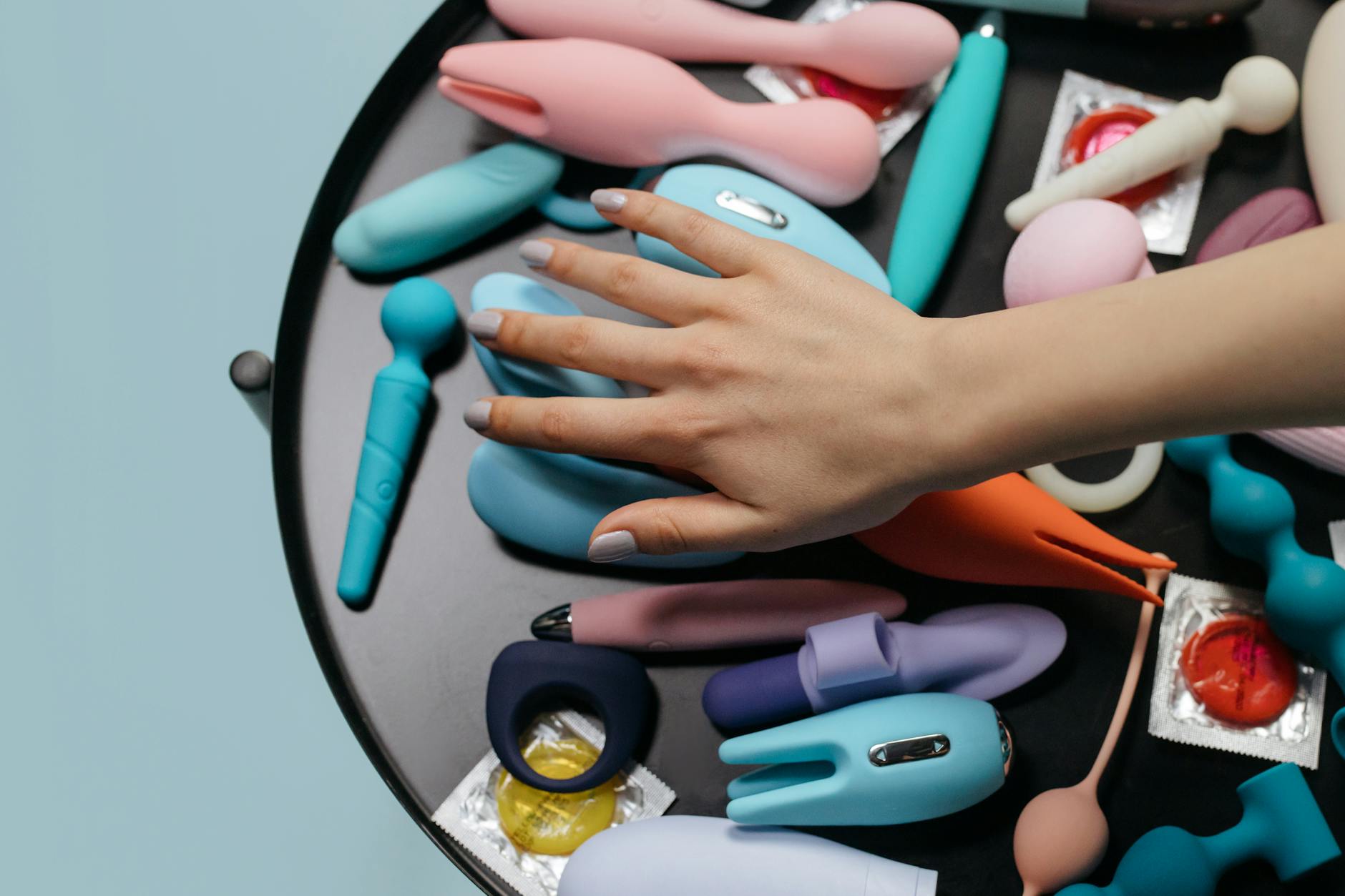
Here's what nobody tells you about emotional distance and sex
When you and your partner have drifted, the first thing that stops working isn't desire. It's permission. You're both waiting for the other person to close the gap first, which means nobody moves. The longer that goes on, the harder it becomes to imagine physical connection without it feeling like a performance or a statement rather than something warm and mutual.
This is where most couples get stuck. They assume they need to fix the emotional part before touching again. The opposite is often true. Reintroducing pleasure together, without pressure or spectating, can be the actual door back in.
Why disconnection kills physical desire
Emotional intimacy and sexual response are neurologically linked. When you feel unseen or distant from your partner, your nervous system doesn't relax into arousal. It stays vigilant. You're scanning for danger instead of scanning for pleasure. That's not a choice you're making. It's a protective mechanism.
Add to that the shame spiral most couples fall into. You feel distant, so sex stops. Then you feel more distant because sex has stopped. Then the idea of restarting becomes so loaded that it paralyzes you both. A single awkward attempt can feel like proof that the relationship has fundamentally broken.
This is where lemon vibrators change the equation entirely.
The bridge back: using lemon vibrators as reconnection practice
Here's the thing about couples who use a vibrator together after a period of distance. They're not focused on performance or outcome. They're focused on exploration. That removes a huge chunk of pressure.
When you and your partner decide to introduce something like a lemon clitoral vibrator into the mix, you're making a statement that's less loaded than "we need to fix this." You're saying, "Let's try something together." The difference is enormous.
Start with the conversation before you start with the toy. Tell your partner you've been feeling disconnected and that you want to rebuild that closeness. Be specific. Don't make it about what they're doing wrong or what's missing. Make it about what you want to explore together. A phrase that works: "I've been thinking about us, and I'd like to try something that might help us reconnect. Would you be open to that?"
Making the first experience together feel safe
The first time you use a lemon vibrator as a couple after emotional distance, you're not trying to have the most incredible sexual experience of your life. You're trying to rebuild trust in physical closeness.
Set the scene in a way that feels intentional but not performative. Soft lighting works. So does music, but only if you both like it. Don't create a "spa night experience" if that's not your style. Authenticity matters more than production value.
Start with clothes on or partially on. Use the vibrator on top of clothing first, or in non-genital areas. This gives both of you time to adjust to the sensation and each other's presence without the immediate vulnerability of full undressing.
Let your partner hold the lemon vibrator first, even if they're not the one receiving sensation. This reverses the usual dynamic where one person is passive. It puts them in the role of giver and explorer, which rebuilds that sense of collaborative intimacy.
The patterns that actually rebuild connection
Three things happen when couples reintroduce pleasure together after distance:
First, you remember you like each other. When you're focused on physical sensation and exploration, the critical voice in your head quiets down. You stop analyzing the relationship and start experiencing it.
Second, you rebuild the skill of being present together. Intimacy is a practice. The longer you've been distant, the rustier that skill gets. Using lemon vibrators gives you a structured way to practice presence without the pressure of full penetrative sex, which can feel more emotionally charged when you're already fragile.
Third, you create a new memory of connection. Your brain doesn't erase the distance you've been through. But it can file a new memory under "times we were close." That changes how the relationship feels going forward.
When to introduce the vibrator versus when to talk first
Honestly, talk first. Every time. The vibrator isn't a substitute for the conversation. It's the tangible expression of it.
If your partner is hesitant, that's information. Don't push. Instead, ask what part of the idea makes them uncomfortable. Is it the idea of a toy? Is it the vulnerability of reconnecting after distance? Is it something about your specific relationship dynamic that feels unresolved? These questions matter.
Sometimes the barrier isn't about the vibrator at all. It's about whether your partner believes the disconnect is temporary or permanent. If they think the relationship is over, no lemon clitoral vibrator will fix that. But if they're as tired of the distance as you are, and they just don't know how to bridge it, then you've got something to work with.
The communication you'll need during and after
During: "Does this feel good?" "What sensations are you enjoying?" "What would you like me to do differently?" These are the questions. Not "Are you turned on?" or "Is this working?" The pressure of outcome questions kills reconnection.
After: This matters as much as during. Don't fall back into silence. Talk about what felt good, what surprised you, what you want to try next time. This is how you rebuild the habit of vulnerability with each other.
Many couples who use lemon vibrators after disconnection report that the actual physical pleasure takes a back seat to the emotional safety of being explored together. That's not a sign it's not working. That's a sign it's working perfectly.
When to seek professional help
If you've tried reconnecting and the distance feels impenetrable, it might be time to talk to a couples therapist. There are often deeper patterns at play. Financial stress, resentment about household labor, unresolved conflicts about family or children. These don't get solved by introducing a vibrator.
What a vibrator can do is crack open the possibility that physical closeness is still available to you both. What therapy does is help you address the stuff that's been keeping you apart. They work together, not instead of each other.
The thing about rebuilding intimacy
It's not about having the perfect experience. It's about showing up for each other with honesty and willingness. Using a lemon vibrator together, after distance, is one way of saying, "I still want to know you this way." That matters far more than whether it feels incredible on the first try.
Sometimes the smallest act of reconnection is the one that changes everything.
People also ask
Can lemon vibrators really help rebuild intimacy after we've been distant?
Yes, but with an important caveat. A vibrator is a tool for exploration and pleasure. It's not therapy. What it does do is create a framework for physical closeness without the pressure of "we need to fix this." Many couples find that reintroducing pleasure together, in a low-pressure way, softens the emotional walls enough to have real conversations. But the vibrator works best alongside actual communication about what caused the distance in the first place.
What if my partner is resistant to using a vibrator together?
Resistance is usually not about vibrators. It's about vulnerability or deeper relationship concerns. Start by asking what specifically feels uncomfortable. Is it the toy itself? The idea of introducing something new when things are already fragile? Worry about performance? Once you understand the actual barrier, you can address it. Sometimes that means starting without the vibrator and building back to it. Sometimes it means getting outside support. Both are valid.
How do I bring up using a lemon vibrator without it feeling like a rejection of my partner?
The language matters. Instead of "I want a vibrator because you're not satisfying me," try "I've been feeling distant from you, and I'd like to try exploring together in a new way. I think using a vibrator might help us reconnect." Frame it as something you're doing together, not something you're doing because something is lacking. The difference is subtle but crucial.
Should we use a vibrator if we haven't had sex in a long time?
You might, but start smaller. Reintroduce non-sexual touch first. Hold hands. Cuddle. Build back to kissing. Once you're comfortable with basic physical closeness again, introducing a vibrator can be a natural next step. If you've been disconnected for years, jumping straight to vibrators can feel jarring. Gradual reconnection often works better.
How do I know if we're ready to reconnect sexually?
You're ready when you can sit together without resentment hanging in the air, and when you're both genuinely curious about the other person again. Not obligated. Curious. If you're still angry or hurt, addressing that first will make everything easier. How to Rebuild Emotional Intimacy When Physical Connection Has Stalled covers this in more depth.
What if reconnecting with a vibrator doesn't work?
It's not a magic fix. If you've used a lemon clitoral vibrator together, communicated about it, and the distance is still there, that's useful information. It might mean the relationship has bigger issues that need professional support. Or it might mean you both need to take a step back and address underlying resentments first. How to Restart Physical Intimacy After Years of Avoidance has more on knowing when to push forward and when to pause.
Final thoughts
Reconnecting after emotional distance isn't about the vibrator. It's about showing up for each other with honesty and the willingness to be vulnerable again. A lemon vibrator is just the vehicle. The real work is the conversation you have before you use it, during it, and after. If you're both willing to do that work, you've got a real shot at closing that gap.