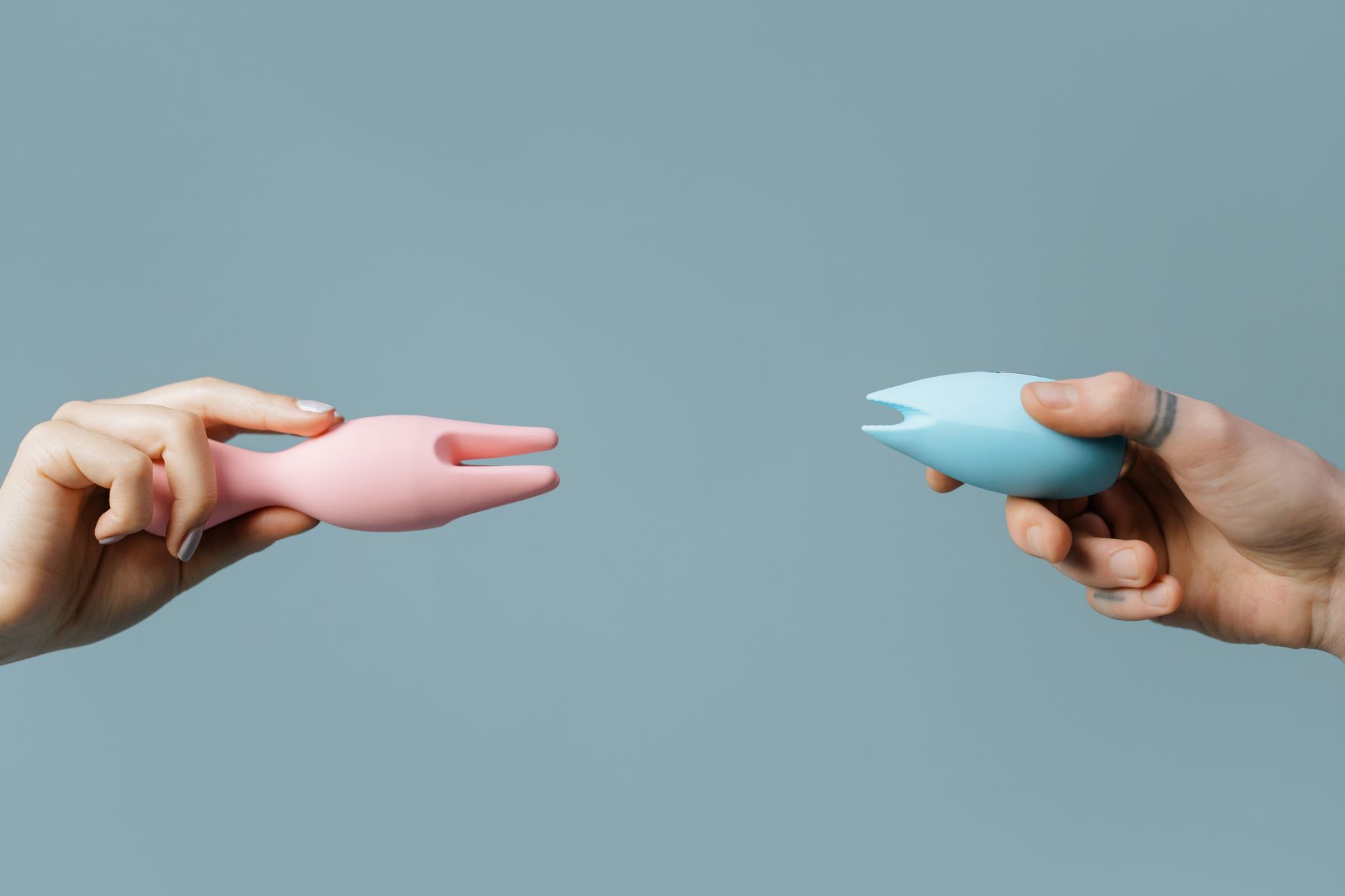
Let's talk about the real block
Low self-esteem and sex don't mix well. When you're uncertain about your worth, your body, or what you deserve, being vulnerable with a partner feels dangerous. You might hold back, rush through, or stay so in your head monitoring whether they're enjoying themselves that you miss your own pleasure entirely. That's not a character flaw. That's a predictable outcome of showing up in intimacy while quietly believing you're not enough.
Here's what I've learned working with couples: introducing a tool like a lemon vibrator doesn't magically fix self-doubt, but it can shift the whole dynamic. It gives you permission to prioritize your own sensation, creates a concrete object to focus on instead of your anxious thoughts, and—most importantly—signals to both of you that your pleasure is legitimate and worth protecting.
Why low self-esteem makes partnered sex harder
When you don't feel good about yourself, your nervous system stays partially activated. You're scanning for rejection, calibrating your performance, reading their face for approval. That's a survival posture, not a pleasure posture. It's nearly impossible to have an orgasm, or even to feel much of anything, when part of your brain is running a constant threat assessment.
Women and people with vulvas often internalize the belief that their job during sex is to be desirable, not to feel good. Add low self-esteem to that and you're essentially holding yourself hostage. You become a spectator in your own experience.
The second layer: insecurity often masquerades as giving. "I don't need anything, I'm fine focusing on you." But what it really means is "I don't believe I deserve attention." Your partner might be confused. Are they doing something wrong? Do you not enjoy sex? The conversation stalls because you're not being honest about what's actually happening.
How a lemon vibrator reshapes the conversation
Introducing a clitoral vibrator into partnered sex isn't about replacing your partner or admitting the relationship isn't enough. It's about saying something radical: my pleasure is non-negotiable, and I'm not ashamed of needing what I need.
Lemon vibrators, with their gentle suction design, require you to slow down and focus on your own sensation. You can't use one while splitting your attention. That forced presence becomes a form of self-advocacy. Your partner watches you prioritize yourself, which paradoxically deepens intimacy because you're finally being real.
There's also a practical permission-giving aspect. If you've spent years believing you're "bad at sex" or "hard to please," having a tool that reliably produces sensation takes some of the pressure off. You're not broken. The vibrator isn't compensation for your inadequacy. It's just a more efficient way to access what's already there.
The conversation before you bring it into bed
Don't surprise your partner with a lemon vibrator mid-intimacy. That guarantees anxiety spirals on both sides. Instead, pick a moment outside the bedroom, when you're both calm and clothed.
Framing matters. Not "I need this because you're not good enough" or "I've been faking it." Instead: "I want to explore my own pleasure more deliberately. I think using a vibrator might help me feel more present and enjoy us more. I'd like your support with that."
A partner worth keeping will get it. They might even feel relieved. Many people with partners worry constantly that they're not satisfying them. When you take responsibility for your own pleasure, you lift that invisible burden.
If your partner reacts defensively, that's information too. It might signal that they have their own insecurity about what your pleasure means about them. That's a conversation worth having with a therapist or counselor, not something to solve by abandoning your own needs.
Using a lemon vibrator when self-doubt shows up
There will be moments mid-intimacy when that critical voice comes back. "They probably think this is weird." "I'm taking too long." "I'm not attractive." When that happens, here's what actually works.
First, name it silently. You've got intrusive thoughts, not truth. The thought is not a prediction about what they're thinking.
Second, anchor yourself in sensation. That's the whole point of the vibrator. Use it as a grounding tool. Notice the sound, the vibration pattern, how your body responds. You're literally training your nervous system to stay present with pleasure instead of vigilance.
Third, if you want to include your partner, direct them. "I like it when you touch my back right now" or "Keep kissing me, I'm getting close." Giving direction is not demanding. It's clarifying. It's a way of saying, you matter to me enough to tell you what I want.
The solo piece, which is essential
You cannot build genuine confidence in partnered sex if you're not exploring pleasure alone first. I tell almost every client this. Use a lemon clitoral vibrator by yourself, without any goal, without a timeline. Not to reach an orgasm. Just to practice being present with your own body and what feels good.
This is the antidote to low self-esteem. When you spend time alone discovering what brings you pleasure, you're building an internal sense of worth that doesn't depend on someone else's validation. You know your body. You trust yourself. That changes everything you bring into partnered intimacy.
Start on a low pattern. Experiment with pressure, timing, location. Learn what your body actually responds to instead of what you think it should. Many women discover for the first time that they can orgasm consistently when they're not managing someone else's feelings.
Red flags and when to pause
If your partner pressures you to use the vibrator, mocks you for needing one, or uses it as an excuse to disengage from their own participation, that's worth examining. A lemon vibrator is a tool for deepening mutual pleasure, not permission for them to check out.
Similarly, if you're using the vibrator as an escape hatch from intimacy with your partner, that's worth noticing. Sometimes we choose tools not because they serve us but because they let us avoid the harder conversation about what's missing.
Low self-esteem often means we accept less than we deserve. If the relationship itself is making you smaller, more insecure, more hidden, a vibrator won't fix that. That's a relationship question, not a pleasure question.
Building actual confidence over time
This isn't a quick fix. Using a lemon vibrator won't instantly erase years of self-doubt. But consistent practice with prioritizing your own sensation, communicating what you want, and letting yourself feel good without earning it creates a slow shift in how you move through intimacy.
You'll notice you're less preoccupied with their reaction. You'll speak up sooner when something doesn't feel good. You'll laugh more. You'll ask for what you want. And you'll start to internalize something fundamental: your pleasure matters. Not as a favor your partner grants you. But as a baseline fact about your own worth.
That's when everything changes. Not because the vibrator is magic. But because you finally stopped believing you needed permission to feel good.
FAQ
How do I bring up using a vibrator if I'm embarrassed?
Embarrassment usually means you're about to do something that matters. Pick a moment when you're both relaxed, maybe over tea or a walk. You could say something simple: "I've been thinking about exploring more intentionally with a vibrator. I'd like your support." Most partners appreciate directness over hints. If the response is shame or pressure, that tells you something important about the relationship.
Will my partner feel threatened if I use a lemon vibrator during sex?
Some partners initially do. That's usually about their own insecurity, not about the tool itself. Help them understand that you're not replacing them. You're making space for your own pleasure within the partnership. Couples that communicate about this openly often find their sex life gets better, not worse, because the anxiety drops.
Can I use a lemon vibrator if I'm struggling with depression or other mental health issues?
Yes, but with intention. Depression often flattens sensation and makes pleasure feel impossible. Using a vibrator might help you access feeling when depressed, or it might feel pointless. Both are okay. The key is not using it as a substitute for addressing the depression itself. Keep working with a therapist while you explore this.
How often should I use a lemon clitoral vibrator with my partner?
There's no "should." Some couples integrate it into most partnered sex, others use it occasionally. What matters is that it feels chosen, not required. If you're using it because you feel you have to, the pressure defeats the purpose. Experiment and see what feels genuinely good.
What if I can only orgasm with the vibrator, not without it?
That's not a problem. You have a reliable path to pleasure. That's actually a win. Some people worry this means they're "dependent" on the vibrator. You're also "dependent" on friction or a partner's touch to feel good. A vibrator is just another sensation your body responds to. Build confidence in what works instead of shame about it.
How do I stop worrying about whether they're enjoying watching me use the vibrator?
Practice. Every time you notice that anxious thought, redirect to sensation. What do you feel? What's good right now? You're literally retraining your attention. Over time, your nervous system learns that pleasure is safe and that their presence isn't a threat. That's nervous system work, and it takes repetition.