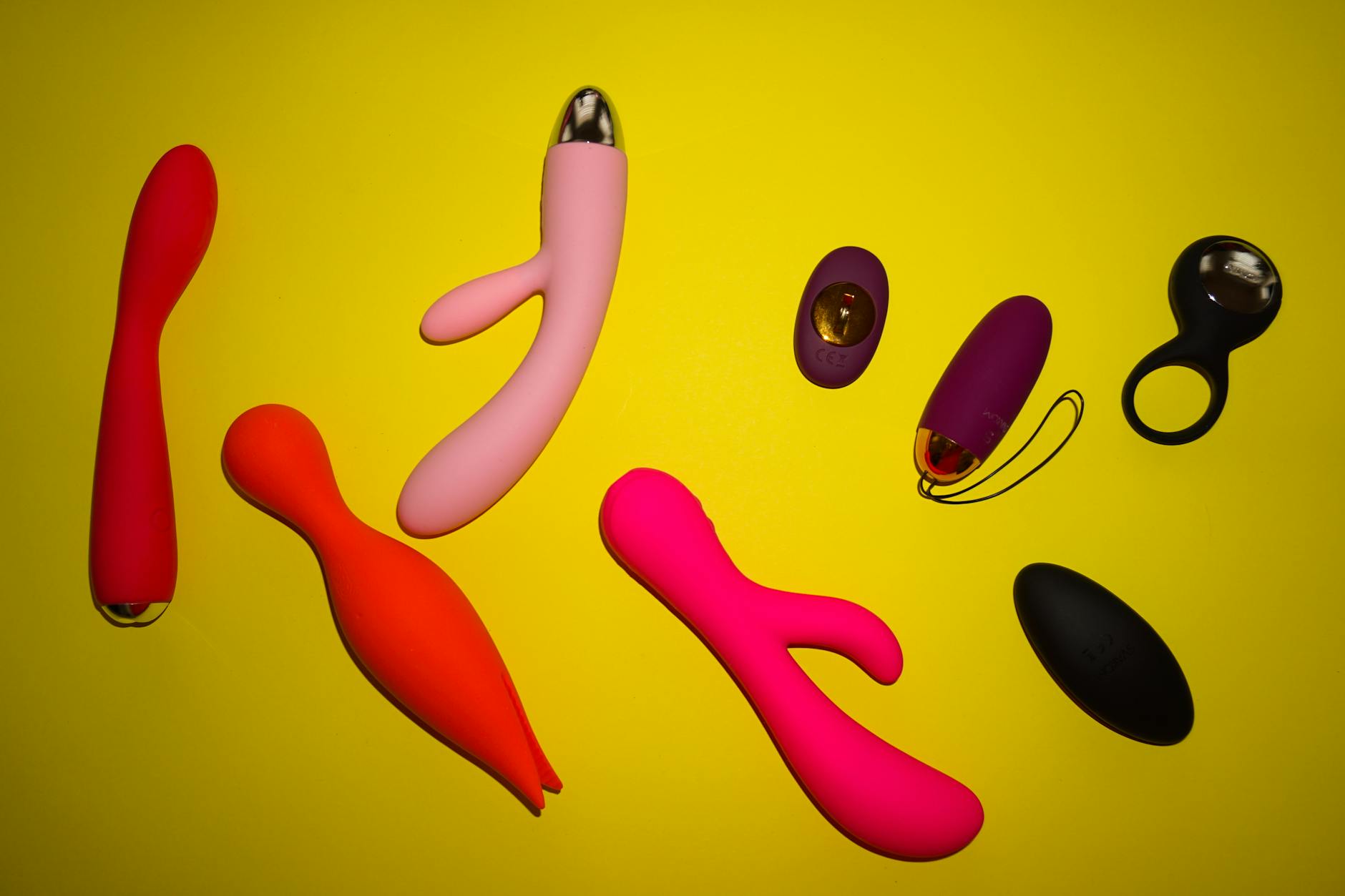
When your partner says, "I've been thinking..."
Here's the thing. When a partner brings up toys unprompted, it's usually not about dissatisfaction. It's about curiosity. It's about wanting to try something new together, or wanting to give you something you might enjoy. And if you're the one who just heard those words, your first instinct might be to overthink it. Don't.
What you're actually looking at is an invitation. The conversation itself is already the hard part, and your partner did it. Now the work is to make sure the follow-through feels good for both of you, not awkward or performative.
The actual conversation (it's shorter than you think)
Let's say your partner has already brought it up, or you're about to. The key here is specificity without overstating. "I've been curious about using a vibrator together" lands differently than "I think our sex life is boring." One opens a door. The other creates defensiveness.
If your partner brought it up, ask clarifying questions instead of assuming. "What made you think about this?" "Is there something specific you'd want to try?" "Are you thinking for you, for me, or something we'd both use?" These questions do two things. They show you're taking the suggestion seriously, and they give you actual information about what your partner is hoping for.
The most important part of this conversation is removing pressure. Toys are optional. They're not a fix for a broken dynamic. If the idea makes you uncomfortable, say so. If your partner feels hesitant, listen to that. The goal isn't to have toy sex. The goal is to stay connected and curious together.
Why lemon vibrators work better for couples than you might expect
Let's talk about design for a second. When couples start exploring vibrators together, they often reach for whatever looks good or seems intense. But lemon vibrators like the Lem are specifically built around clitoral suction and air-pulse technology, which means a few practical things happen.
First, the sensation is genuinely different from traditional vibration. Air-pulse toys stimulate in a way that doesn't require direct friction, which matters if you have sensitive tissue or if you're exploring something new. Second, because the Lem is held externally, there's no insertion involved, which makes it easier to use during partnered sex without coordination feeling clunky. Your partner can be inside or next to you while you use it, or you can take turns, or they can hold it while you guide. All of those options feel more integrated than fumbling with an internal vibrator mid-thrust.
Third, the playfulness factor. The Lem isn't intimidating. It doesn't look clinical. It looks like what it is: a toy designed for pleasure. That matters when you're both new to this and still feeling a bit self-conscious.
Choosing a toy together (without it feeling like you're shopping for household appliances)
Here's how not to do this: don't browse Amazon together in tense silence while judging each other's reactions to photos. That's not bonding.
Instead, start by talking about what appeals to you both. Are you more curious about the sensation, or the novelty of doing something new together? Do you want something designed to be used during partnered sex, or something that works for solo use that you might incorporate sometimes? Is intensity important, or is it more about the ritual of trying something together?
Once you're in the same ballpark, look at a few options. The Lem works well for couples specifically because it's reliable, intuitive, and doesn't require much explanation or adjustment. Air-pulse technology is less intimidating than traditional vibration when you're starting out. And it's designed to feel good, which means you're not spending energy worrying about whether it's "working right."
When you're looking at options together, let yourself be a bit silly about it. Read reviews. Make jokes. If something sounds ridiculous, laugh. This shouldn't feel like a serious purchase decision. It should feel like you're picking out something fun.
The actual first time (managing expectations is everything)
Here's what most couples get wrong: they expect the first time using a toy together to be mind-blowing. Sometimes it is. More often, it's a little awkward, kind of fun, and you learn something about what you both like.
Take the pressure off the outcome. Set realistic expectations. "I'm curious to see how this feels" is a better frame than "This is going to change everything." Most of the pleasure in using a toy with a partner isn't the intensity of the sensation, anyway. It's the novelty, the permission to ask for what you want, and the fact that you're both willing to try something unfamiliar together.
Start slow. If you're using the Lem, begin on a lower setting. You can always build intensity. It's much harder to dial back if you've already gone too hard too fast. Take time to explore what feels good. This might be the first time you actually know what direct clitoral stimulation feels like, or what suction-based sensation feels like compared to vibration. Let yourself discover.
If your partner is new to toys, their hands might be slightly shaky the first time they hold one. If you're nervous, your body might not respond exactly as usual. That's normal. Sex isn't a performance. It's exploration. Treat it that way.
The conversation that comes after
This matters more than the first use itself. After you've tried something together, check in. Not in a clinical way. Just honestly. "That was fun" or "I didn't expect that to feel that way" or "I want to try it differently next time." This is how you actually learn about each other's desires, instead of guessing.
If you loved it, great. Talk about doing it again. If it felt awkward, that's also fine. Sometimes toys don't work for someone. Sometimes they work better solo than partnered. Sometimes the appeal is just knowing your partner wanted to try. All of those outcomes are valid.
The couples I work with who have the best relationships aren't the ones who use toys. They're the ones who can talk about sex honestly after the fact. The toy is just a vehicle for that conversation.
Common worries (and what's actually true)
"Does using a toy mean my partner isn't satisfied with me?" No. Most of the time, toys are about expanding the experience, not replacing anything. If your partner brought it up, it's likely because they want to feel good with you, not instead of you.
"Will I get used to it and not enjoy sex without it?" This is a real question, but the answer is no for most people. Your body doesn't "adapt" to toys in the way you might adapt to medication. If anything, clitoral vibrators often help people understand their own pleasure better, which usually improves partnered sex.
"What if we try it and it kills the mood?" Then you stop. You laugh about it. You try again another time, or you don't. Sex doesn't have to be serious. Sometimes the sexiest thing you can do is acknowledge that something didn't work and move on without making it a big deal.
"Is this weird?" No. Exploring pleasure together is pretty much the opposite of weird. It's direct, honest, and curious. That's healthy.
How to integrate toys into your regular rhythm
After the first time, toys don't have to be a big production. They can just be there, sometimes. You're not obligated to use one every time. You're also not obligated to keep using it if it stops appealing to you.
What actually helps couples is treating toys like any other tool. Some nights you use one. Some nights you don't. Some nights you reach for it mid-sex because something changed and you want to shift the sensation. Some nights you forget about it entirely. That's the goal. Tools that are so integrated into your experience that they stop being novel and start being just... an option.
For many couples, the real shift happens when the toy goes from "special thing we're trying" to "thing that sometimes helps one of us feel better." That usually takes a few weeks of casual use.
The longer conversation: what this actually reveals
Here's what I see in my practice. When couples successfully navigate introducing toys together, they're not just adding something physical. They're building a habit of being vulnerable and curious together. They're proving to each other that trying something new won't break the relationship. They're showing that pleasure matters, and that both partners are worth the conversation.
That's the real value. The toy is secondary.
So when your partner says they want to explore, take it seriously not because toys matter that much, but because your partner is inviting you into a conversation about desire. That conversation, handled with honesty and a little bit of humor, is what actually shifts things.
FAQ
How do I know if my partner's suggestion about toys comes from dissatisfaction?
In most cases, it doesn't. Desire to explore is different from disappointment. If your partner wanted to express disappointment, they'd say so. Most people who bring up toys are saying, "I want to try something new with you." If you're worried, ask directly. "I'm excited about this, and I also want to make sure you're happy with our sex life." Their answer will tell you everything.
What if I want toys but my partner hasn't mentioned it?
Bring it up the same way your partner would. Specifically and without pressure. "I've been curious about trying a clitoral vibrator together" is clear and opens conversation. Gauge their reaction. If they seem hesitant, ask why. If they seem interested, move forward with the same care you'd want them to show.
Is the Lem or another lemon clitoral vibrator better for couples than toys designed for penetration?
It depends on what you want. If you're curious about clitoral stimulation, air-pulse toys like the Lem are excellent because they work externally and don't require coordination during penetration. If you want something that works during sex, external toys integrate more easily. But there's no "better." There's only what appeals to you both.
How do I bring up using a toy if my partner seems shy about sex in general?
Start smaller. Instead of jumping to toy exploration, work on general communication first. "I'd like us to talk more openly about what feels good" is a foundation. Once that comfort exists, toys feel less like a leap and more like a natural next step.
What if the toy doesn't feel good the first time?
Try it again another time. First experiences are often awkward. Your body might be tense. You might not know how to position it. You might be in your head. Pressure kills sensation. Try it again when you're both relaxed and curious, without expecting anything specific to happen.
Can we use a clitoral vibrator while my partner is inside me?
Yes. External toys like the Lem are designed to work during partnered penetration. Start with you or your partner holding it, and you'll figure out positioning that works for your bodies. Communication helps. "Move left" or "hold it there" matters more than you'd think.
Moving forward
Your partner wanted to talk about this. That took courage, or at least vulnerability. The fact that you're here reading this means you're taking it seriously. That's most of the work right there. The rest is just honesty, patience, and permission to be a little awkward while you figure out what feels good.
Your pleasure matters. Your partner's curiosity matters. And toys are just one tool that might help you both feel more connected and understood. Everything else follows from that.