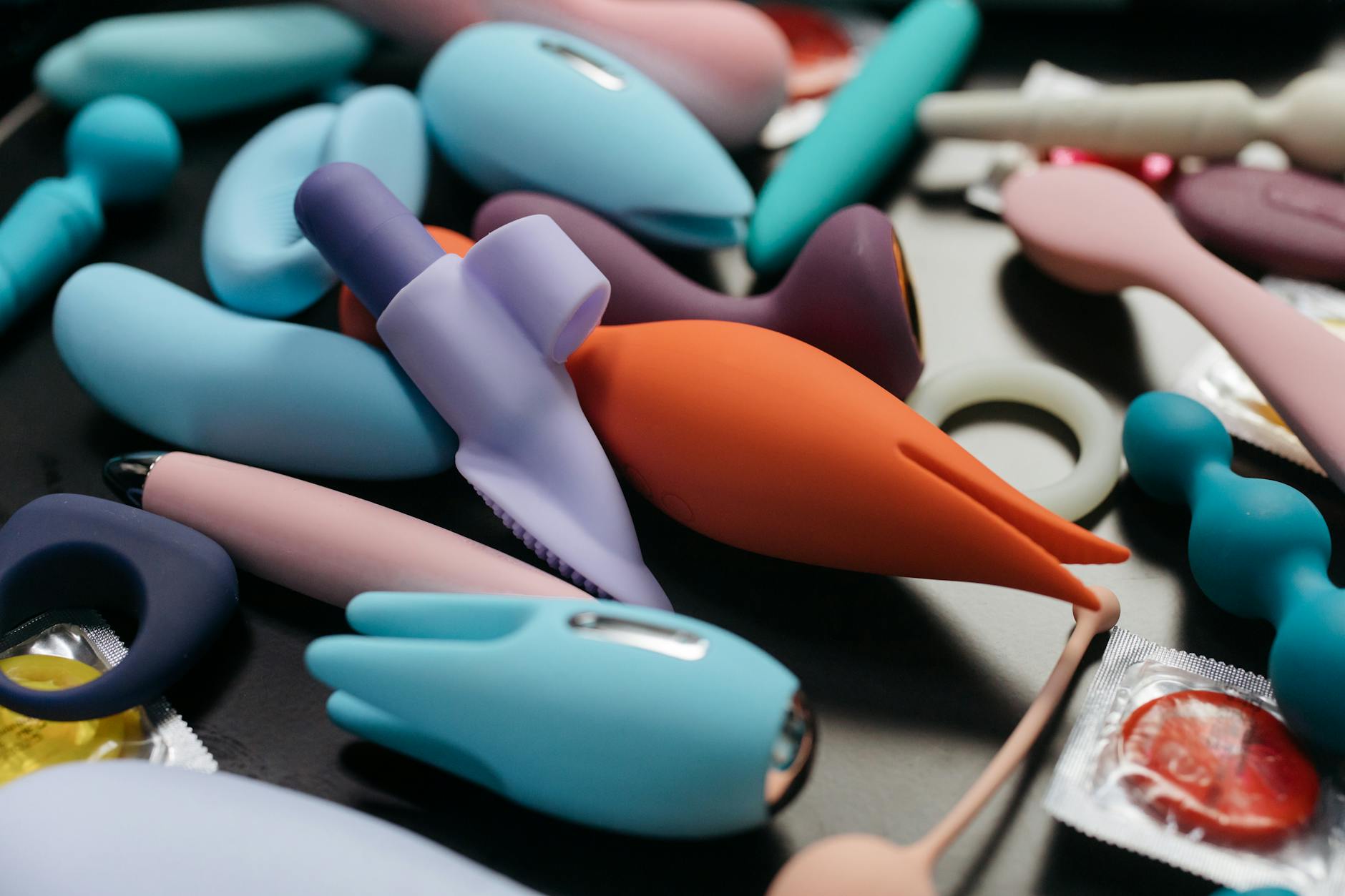
Let's get real about the awkwardness
Honestly though, the hardest part about bringing a lemon vibrator into partnered sex isn't the vibrator itself. It's the conversation. You're about to say "I want this toy" out loud to another human, and your brain is spinning narratives: "Will they think I'm not satisfied?" "Does this mean they're not enough?" "What if they say no?"
I've worked with hundreds of couples navigating this exact moment. The pattern is consistent. The conversation feels harder than the actual introduction by a factor of about ten. And almost every single time, the partner's response is something like "Oh thank God, I thought you'd never ask."
Here's what I've learned about making this work smoothly.
Why the conversation matters more than the toy
The introduction of a lemon clitoral vibrator into partnered sex isn't really about the toy. It's about permission. Permission to say what you want, permission to admit that your body has preferences, permission to separate your partner's skill and attentiveness from your own physical response.
Many people grow up learning that good sex means your partner does the work and your body responds. The idea that you might need something specific, or want something different, or need time to warm up, gets coded as criticism. It isn't. Clitoral vibrators work best because they bypass the pressure to perform responsiveness on your partner's timeline. They let your nervous system do what it actually does instead of trying to speed it up.
Your partner isn't losing this conversation. They're gaining one. You're giving them permission to also want things, to also have preferences, to also say "this isn't working for me." That's how you build actual intimacy.
The conversation itself: three approaches
The direct opener. If you and your partner already talk about sex pretty openly, this is cleanest: "I want to try using a vibrator with you. I think it would feel amazing and I want you there while we explore it." No apology. No preamble. Just fact.
The context setter. If conversation around pleasure feels newer territory, add a sentence of context: "I've been reading about lemon vibrators and I'm curious. Not because anything's wrong, but because clitoral stimulation works differently for my body than penetration does, and I think we could both enjoy this." You're making space for them to understand this is about physiology, not their performance.
The team framing. Some couples respond better to "let's try" language: "I think we could have more fun together if we used a toy. Want to pick one out with me?" This pulls them into the decision. They're not being told you need something. They're being asked to explore something together.
Pick whichever one reflects how you actually talk. Authenticity matters more than the script.
What to expect from the first introduction
Your partner might need a minute to metabolize this. That's normal. Even partners who are genuinely enthusiastic sometimes need five minutes to shift from "we were talking about dinner" to "we're talking about this." Don't fill the silence by reassuring them. Let them process.
If they say yes, don't immediately strip down and get going. Talk about it first. Show them what you're thinking of. A lemon clitoral vibrator looks different from traditional vibrators. That's part of why it works. Air-suction technology doesn't feel like penetration or buzzing. It feels like a completely different sensation. Knowing that ahead of time helps.
Decide together how they want to be involved. Some partners want to hold the toy. Some want to use it on you. Some prefer to focus on something else (like penetration) while you handle the lemon vibrator yourself. There's no correct version. The correct version is what works for both of you.
The first time might be awkward anyway. That's fine. You're learning each other's bodies in a new way. Awkwardness is part of that. It usually dissolves fast once you actually start.
Why your partner probably wants this
Here's what therapists know that people often don't: most partners are relieved when their person brings up using a vibrator. Here's why. One of the most common sources of tension in long-term relationships is unspoken pressure around orgasm. Someone's not coming. Someone knows it. No one talks about it. The pressure builds. The experience gets worse, not better.
A lemon vibrator or any clitoral toy short-circuits that tension immediately. It says "this isn't about your technique, this is about my nervous system." That's permission for your partner to relax. They can stop performing and start connecting.
Most people also find that introducing a toy actually strengthens their sex life as a couple. Because you've now had a conversation about what you want. And that conversation usually opens other ones.
Integrating it into your actual rhythm
Once you've decided you want to do this, the next question is how. Do you use it every time or sometimes? Does your partner touch you elsewhere while you use it? Do you take turns using it on each other?
I recommend starting with "sometimes," not "always." Using it every time can sometimes make it harder to enjoy sex without it. But integrating it a few times a week lets your nervous system learn that multiple paths to pleasure exist.
If your partner is using the lemon vibrator on you, start with low settings. The sensation is intense. You can always increase from there. If you're using it on yourself while they're involved (through penetration or otherwise), communicate what intensity you're at. "I'm going to three now" or "I'm almost there" gives them context for what's happening in your body.
Some couples find they need to have a quiet signal for "I need you to pause for a second" or "stay right there." That's completely legitimate. Your pleasure isn't a solo activity anymore. It involves coordination.
When to seek support
Most conversations about lemon vibrators go well. But sometimes they don't. If your partner responds with shame, anger, or accusation, that's worth paying attention to. That's not about the toy. That's about deeper beliefs about sex, masculinity, or control that might need actual conversation.
If you're in a relationship where you already feel unable to ask for what you want, adding a vibrator won't fix that. It might actually highlight the problem more sharply. In that case, a sex-positive couples therapist is a good investment. Not because your relationship is broken. But because learning to ask for what you want, and having a partner who can hear it, matters.
The bigger picture
Introducing a lemon clitoral vibrator into your partnership is actually just practice for the bigger conversation: "I have a body with its own needs, and I'm allowed to ask for what helps me." That's not a solo conversation. That's a couple's skill. And once you nail it around pleasure, it usually extends everywhere else.
Your partner probably already knows you have preferences. They already know you're a whole person. Now you're just saying it out loud, together, in a way that might make both of your lives better. That's not awkward. That's intimacy.
People also ask
Will using a vibrator change how sex feels for my partner?
Not negatively. Most partners actually report enjoying sex more when their person is getting better stimulation. Less pressure on them to "make it happen" usually means they can relax and enjoy themselves too. Some find the experience of using a lemon vibrator on their partner incredibly hot. Some prefer to focus elsewhere while you use it. Both are normal.
How do I bring this up if my partner seems uninterested in sex?
This might actually be the conversation to have. Low desire sometimes correlates with low pleasure. If sex feels like pressure or obligation, adding a vibrator won't help. But saying "I want sex to feel good for both of us, and I'm not sure what we need to shift," can open a real discussion. That might lead to a vibrator. It might lead somewhere else. But the conversation is the actual first step.
What if I want to use a vibrator but my partner doesn't want to be involved?
That's fine. You can use a lemon vibrator solo, or you can use it while your partner is present but not actively involved. You might also clarify what "not involved" means to them. Some partners don't want to hold the toy but are happy to watch. Some want to do something else while you're using it. Get specific about comfort.
Does using a clitoral vibrator mean I won't be able to come without it?
No. This is a common fear and almost never true. Your body doesn't "forget" how to respond to other stimulation. You're just adding a tool. You'll likely find you can still orgasm without it, but you might prefer the vibrator sometimes. That's choice, not dependence.
How do I know which lemon vibrator to choose for partnered use?
Consider size, intensity, and noise. Smaller vibrators like our lemon clitoral toys are easy to hold and integrate into different positions. If your partner will be using it on you, make sure they can grip it comfortably. If you'll be using it yourself, priority goes to what feels best in your hand. Start with the basic settings. Higher intensity can always come later once you know what works for your body.
What if my partner suggests using a vibrator but I feel uncomfortable?
Take a breath. You're not rejecting them. You're just saying "I need to think about this." There's no timeline. Explore what the discomfort is about. Is it practical concern (noise, mess, integration)? Is it emotional (worry about performance, ownership, comparison)? Once you know, you can actually address it. Sometimes a conversation with a therapist helps clarify your own feelings before you loop your partner back in.
References and further reading
I've drawn on research about couples communication, sexual satisfaction, and the neuroscience of pleasure in writing this piece. If you're looking for more resources on talking with partners about sexual needs, the Gottman Institute publishes extensively on couples communication, and sex-positive educators like Emily Nagoski offer accessible guides to how pleasure actually works.
The most important resource is the conversation itself. That's where actual intimacy lives.