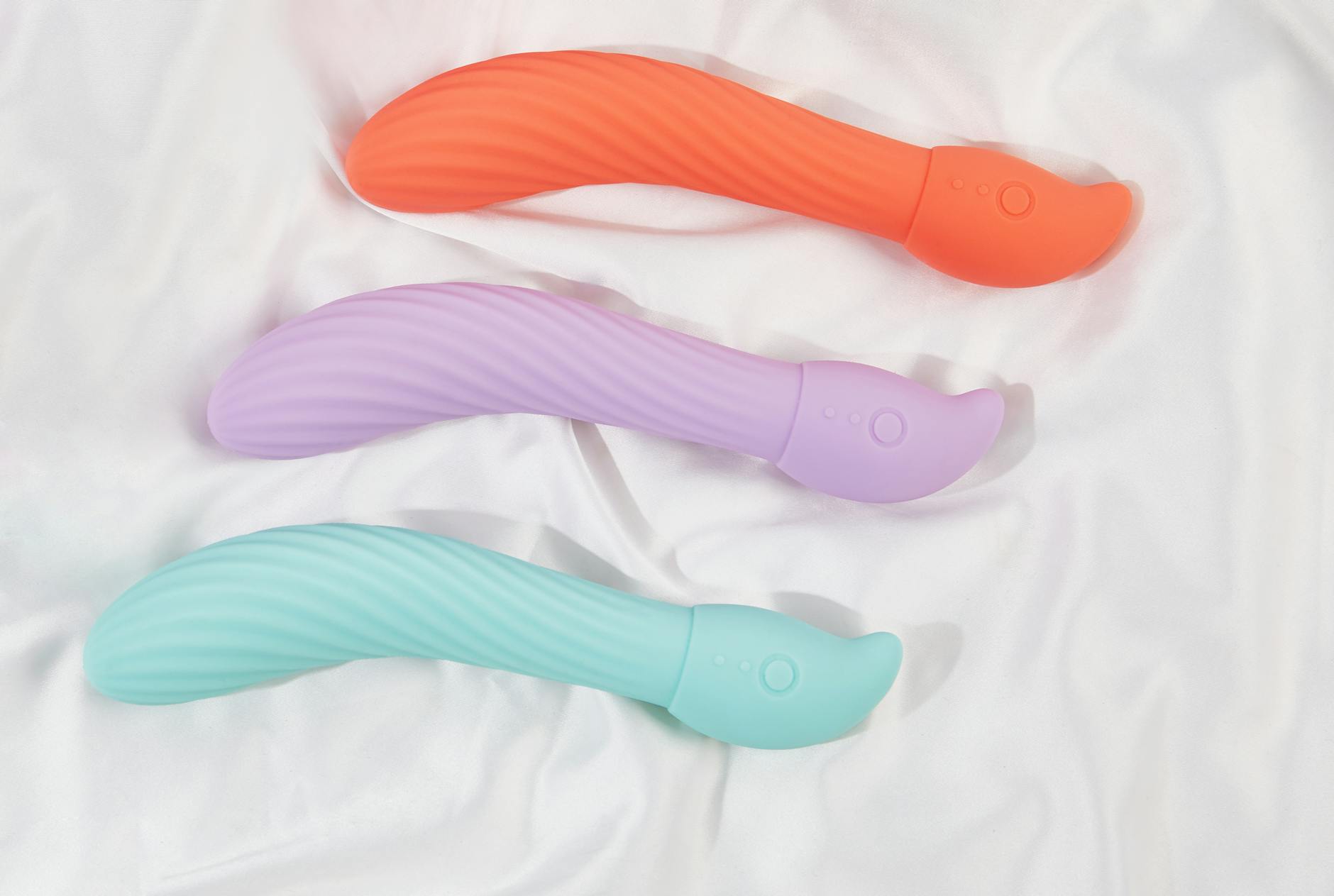
Position matters more than you think
Let's be real. Most of us default to lying on our backs because it feels safe and familiar. But here's the thing: your body position fundamentally changes how a lemon vibrator feels, where sensation concentrates, and how quickly you build toward orgasm. Different angles create different pressure, different stimulation patterns, and sometimes entirely different types of pleasure.
I work with clients who've used the same lemon vibrator for years, then shifted positions and felt like they'd bought a brand-new toy. That's not an exaggeration. It's biomechanics meeting sensation.
The classic back position: control and ease
Lying on your back with legs flat or knees bent is where most people start with their first lemon clitoral vibrator, and there's a reason. You've got full visual access to what you're doing, you can adjust angle and pressure easily, and your core is totally relaxed.
Here's the advantage: you control the exact angle of the toy against your body. With a lemon vibrator's curved design, you can angle it slightly upward to hit the upper glans of the clitoris, or shift it downward for broader stimulation across the whole vulva. Your hands aren't working to hold your body up, so you can focus entirely on sensation.
The trap is that lying flat can sometimes numb sensation if you're pressing too hard into the mattress. The weight of your leg and hip dampens vibration. Solution: prop your hips up with a pillow under your lower back, or rest one leg flat and bend the other knee. This small adjustment lifts you just enough to let the vibration travel through your pelvis instead of getting absorbed by the bed.
Many people report that this position gives them reliable, familiar orgasms. It's not the most intense, but it's repeatable, which matters when you're building confidence or learning the tool.
The sitting position: deeper sensation and pelvic awareness
Sitting opens up an entirely different experience. Whether you're propped against a headboard, on the edge of a chair, or cross-legged on a pillow, sitting engages your core and tilts your pelvis in ways lying down doesn't.
When you're upright, you're actively supporting yourself. That engagement means more blood flow to the pelvic floor, which often translates to heightened sensation. The lemon vibrator has better contact with the whole vulva because you're not pressing down into anything. Vibrations travel upward instead of sideways into the bed.
This position is especially useful if you're trying to deepen your connection to your pelvic floor or building stronger orgasms. The angle tends to create more integrated sensation across your whole pelvis rather than isolated stimulation at the clitoris.
One note: if you have any pelvic floor tension or pain, sitting upright can make the pelvic floor work harder, which sometimes intensifies discomfort. In that case, lean back slightly into pillows so you're reclined but not flat. You get the benefits of the lifted angle without the muscular effort.
The side-lying position: ease and sustained pleasure
Lying on your side is criminally underused. It's comfortable, it's intimate if you're with a partner, and it changes the angle of stimulation in surprising ways.
When you're on your side, gravity shifts. Instead of your toy pressing into your clitoris head-on, it approaches from a lateral angle. This often feels softer, less intense, and more sustained. For people who find direct clitoral stimulation overwhelming or for anyone building endurance and staying in pleasure longer, side-lying is your position.
It's also the most accessible position if you have hip pain, back issues, or pelvic floor dysfunction. Your body isn't supporting weight, so the pelvic floor relaxes more completely. If you're working with a therapist on pelvic floor tension or vaginismus, side-lying with a lemon vibrator can be a gentler entry point than any other position.
Pro tip: knees bent slightly toward your chest, top leg relaxed. This opens your vulva naturally without any muscular effort. Breathing is easier, relaxation comes faster.
Standing and leaning: intensity and control
Standing sounds impractical. It's not. Leaning against a wall or the side of a chair with one foot forward gives you stability and a whole different angle on stimulation.
When you're standing or leaning, your lemon vibrator approaches from below upward, which many people find more direct and intense. It's easier to control pressure precisely because you're using your hand strength, not your body weight. The novelty of the angle often surprises people who've only ever tried lying down.
Standing also removes pelvic floor engagement almost entirely, which paradoxically can intensify orgasm for some people. Without the muscular effort of supporting yourself, the orgasm itself becomes more localized, sometimes sharper.
The downside: it's less sustainable. You can't stay standing for 30 minutes comfortably. This position is excellent for when you know roughly what you want and you're looking for quick, reliable pleasure. It's less useful for extended exploration or deep, slow builds.
With a partner: positions that change everything
If someone else is using the lemon vibrator on you, position becomes a conversation. The person holding the toy has control of angle, pressure, and duration. That's intimate and sometimes it's powerful. It's also worth knowing the positions that work best.
Side-lying facing your partner is often the most intimate. You can see each other, communicate easily, and the angle tends to be less intense, which means longer builds and more presence. Back-lying with your partner sitting between your legs gives them full visual access and control, but it can sometimes feel more performance-oriented than connected.
Talk about what you want before you start. "I want this to feel slow" or "I like consistent pressure" or "I want to see you" changes which position makes sense. Many couples find that talking about position and angle actually deepens intimacy because it requires paying attention to what your partner's body is asking for.
How angle changes sensation intensity
Here's the biomechanics: when a lemon clitoral vibrator approaches your clitoris head-on and straight, you get maximum intensity. Every vibration hits dead-center. When it approaches from an angle (like side-lying), vibrations spread across a wider area and feel less concentrated. When it approaches from below (standing), it often feels more intense in a different way, more pressure-based than buzzing.
Intensity isn't the same as pleasure. Less intense doesn't mean worse. Different intensities suit different days, different moods, different bodies. Learning to use different positions with your lemon vibrator is actually learning to speak your own pleasure language more fluently.
The pelvic floor element you can't ignore
Your pelvic floor is engaged differently in every position. Lying flat: minimal engagement, full relaxation. Sitting upright: moderate engagement, active. Standing: almost none, which sometimes surprises people with how different sensation feels.
For most people, more pelvic floor engagement means more intense sensation and stronger orgasms. But if you have pelvic floor dysfunction, that same engagement can mean pain or tension. Understanding which positions minimize pelvic floor work and which ones maximize it helps you choose strategically.
If you're building pelvic floor strength, sitting with your lem vibrator and actively engaging the muscles during use can be therapeutic. If you're trying to release tension, side-lying or back-lying with pillows under the hips keeps engagement minimal.
Switching positions mid-session
Here's something I tell clients that changes how they use their lemon vibrators: you don't have to pick one position and stick with it. Switching positions mid-session changes sensation so dramatically that it can feel like restarting.
Start on your back for familiar, controlled pleasure. Shift to sitting for deeper sensation. Move to your side for softness. The variety itself can extend pleasure and prevent the plateau some people hit when they're in one position too long. It also teaches your body that pleasure has different textures and depths depending on how you hold yourself.
Breathing changes with position
One thing I notice that people don't talk about enough: your breathing changes with position, and breathing changes sensation. When you're lying flat and tense, breathing gets shallow. When you're side-lying and relaxed, breathing deepens. That shift in breath actually dampens or amplifies what your lemon vibrator feels like.
Consider your breathing part of the position. Lie on your side, breathe deeply, and sensation intensifies. It's not magic. It's oxygen and relaxation changing how your nervous system processes sensation.
FAQ
Which position gives the strongest orgasm with a lemon vibrator?
That's individual. For most people, sitting upright or standing gives the most intense sensation because the pelvic floor is less engaged and vibration travels upward instead of sideways. But intensity isn't the same as satisfaction. Some people have their deepest, most fulfilling orgasms lying on their side in a relaxed, connected state. The answer is: try all of them and notice what actually feels best for your body, not what sounds theoretically strongest.
Can I use a lemon vibrator in a bath or shower?
Most modern lemon vibrators including Hello Nancy's models are waterproof or water-resistant. Check your specific toy's documentation. Water changes how sensation feels because water adds resistance and buoyancy. Some people find waterproof lemon vibrators particularly useful in a warm bath because the heat relaxes the pelvic floor, intensifying sensation. Just make sure you're using a waterproof model and that you dry it completely afterward.
Does position matter if I'm using a lemon vibrator with a partner?
Absolutely. The position that works when you're using a toy on yourself might feel totally different when a partner is controlling it. Side-lying often feels more connected and intimate because you can see each other and communicate easily. Lying on your back sometimes feels more like receiving, which some people love and others find vulnerable. Talk about what feeling you want before you choose a position.
What position is safest for beginners with lemon vibrators?
Back-lying with pillows under the hips. It's stable, comfortable, allows full control of pressure and angle, and your pelvic floor is relaxed. You can see what you're doing, adjust easily, and there's zero risk of losing balance or discomfort from supporting yourself.
How long can I stay in each position with a lemon clitoral vibrator?
That depends on your comfort and how much muscular engagement the position requires. Back and side lying are indefinitely comfortable. Sitting is comfortable for 20-30 minutes before your back or hips start complaining. Standing is sustainable for maybe 10-15 minutes before fatigue sets in. Switch positions when you need to, not when you think you should.
Can position help if a lemon vibrator doesn't feel like much at first?
Definitely. If direct stimulation on your back feels numb or weak, try sitting up. If sitting feels like too much intensity, try your side. Sometimes your body just needs the right angle to wake up sensation. Different positions can absolutely be the difference between "this does nothing for me" and "okay I feel something now."
The takeaway
Your position shapes everything about how a lemon sexual toy feels. Back lying gives control. Sitting gives depth. Side lying gives ease. Standing gives directness. Each one is useful at different times, and learning to move between them teaches you more about your own pleasure than staying in one position ever could.
Most people have a default position they return to. That's fine. But experimenting with the full range gives you options, deepens your understanding of how your body experiences sensation, and honestly makes solo or partnered pleasure more interesting. Your lemon vibrator isn't a flat tool that works the same way every time. Your body position is part of the design.
Ready to explore what works best for you? The learning happens in the trying. Reach out if you have questions about technique or what position might work best for your specific situation.
References & Further Reading
- American College of Obstetricians and Gynecologists. (2020). "Sexual Health and Wellbeing." ACOG Patient Education.
- Komisaruk, B. R., Beyer-Flores, C., & Whipple, B. (2006). "The Science of Orgasm." Johns Hopkins University Press.
- Meston, C. M., & Frohlich, P. F. (2000). "The Neurobiology of Sexual Function." Archives of General Psychiatry, 57(11), 1012-1030.
- Peixoto, M. M., & Nobre, P. (2015). "Predictors of Sexual Distress in Women: The Relevance of Cognitive-Emotional Factors." Journal of Sexual Medicine, 12(8), 1681-1691.