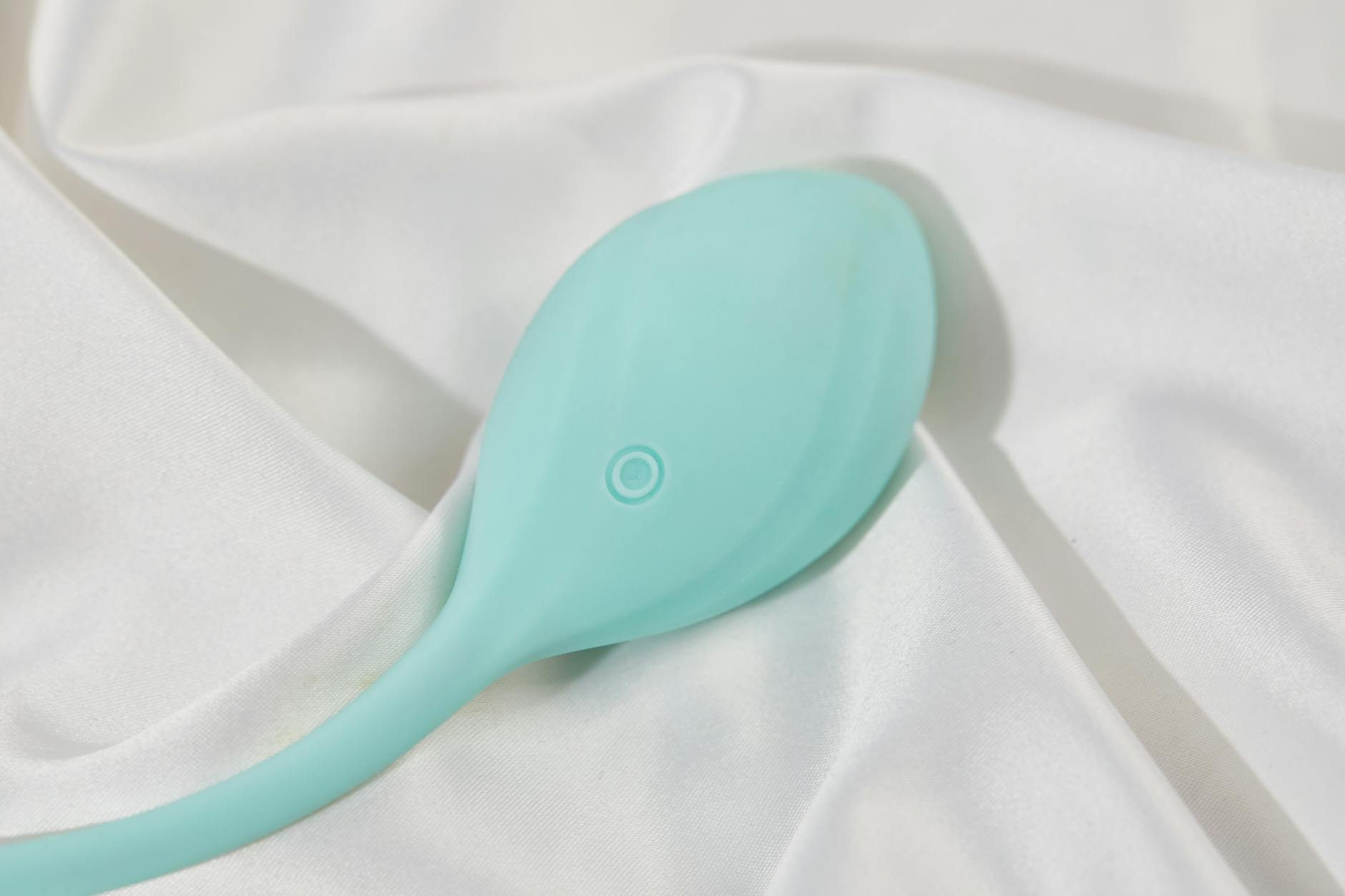
Let's talk about what anxiety actually does in the bedroom
Anxiety isn't just nerves. It's a full-body experience that rewires how pleasure lands. When one or both partners are anxious, the nervous system is running a threat-detection program instead of a pleasure-reception program. Your body tightens. Your mind narrates every sensation as "wrong" or "not enough." Orgasm becomes a performance metric instead of a feeling. And the harder you chase it, the further away it gets.
I've worked with dozens of couples where anxiety killed the intimacy long before medication or trauma showed up. The fix isn't always therapy, though that helps. Sometimes it's finding a tool that bypasses the anxiety loop entirely. For many of my clients, that tool is a lemon vibrator.
Why traditional vibrators amplify anxiety for couples
Most vibrators are designed as solo tools. They're strong, directional, and built for rapid escalation. When a partner introduces a traditional vibrator into couple's play, there's an implicit message: "This is what I need to feel something." Anxiety doesn't hear "this is fun." It hears "I'm not enough." The receiving partner might feel self-conscious. The giving partner worries they're doing it wrong. Suddenly the toy has become a third presence in the bed instead of an extension of touch.
Clitoral vibrators that rely on intensity or direct contact can also trigger performance pressure in a different way. Both people are now racing toward orgasm, and that speed can actually suppress arousal rather than build it. The body reads it as urgent, not intimate.
How air-suction lemon vibrators change that dynamic
A lemon vibrator works differently. Instead of buzzing directly on tissue, it uses gentle suction and pulsing patterns that stimulate a wider nerve cluster without overwhelming it. This means:
The sensation feels less like "doing something to" and more like "creating a space around." For anxious partners, that distinction is massive. There's no performance metric. There's no "harder faster stronger." There's just invitation.
Second, the slower ramp-up patterns give the nervous system time to downshift from threat mode to pleasure mode. Anxiety thrives on speed and surprise. A lemon clitoral vibrator's gradual intensification actually calms the amygdala while it's building arousal. You're not forcing pleasure. You're creating conditions for it to arrive.
Third, suction-based stimulation creates a paradoxical intimacy. Because the sensation is so different from what fingers can do, it feels like something new to explore together rather than something one person is doing to the other. Couples often report that using a lemon sucker together feels playful instead of clinical.
The neuroscience of anxiety and arousal
Here's what's happening in the brain. Anxiety activates the sympathetic nervous system (fight-or-flight). Arousal requires the parasympathetic nervous system (rest-and-digest). These two systems can't fully activate at the same time. It's not willpower. It's wiring.
Traditional vibrators with their high frequency and sharp sensations can actually keep the sympathetic system engaged. Your body feels stimulated but not relaxed, which creates a confusing state. Am I excited or am I in danger?
Air-suction lemon vibrators operate at lower frequencies with gentler patterns. They signal safety to the nervous system. Combined with the novelty factor (it's a different sensation, so the brain is curious rather than defensive), they make it easier for both partners to shift into a parasympathetic state. You can be aroused and calm at the same time. That's when real intimacy happens.
What anxious partners report using them together
The shift people describe is consistent. The receiving partner stops waiting for something to happen and starts actually feeling. The giving partner shifts from "am I doing this right" to "what do they enjoy." That's a conversation instead of a performance.
One couple I worked with had been together for eight years but anxiety had made their intimate life feel transactional for the last two. He felt pressure to "perform" with his body. She felt pressure to finish quickly so he wouldn't lose interest. A lemon vibrator reframed the entire interaction. Suddenly they were exploring together, laughing at the different patterns, checking in about what felt good without shame. Six weeks later, their intimacy had shifted entirely not because the toy did something magical, but because the anxiety loop broke.
Another common report: couples using lemon vibrators together notice they're more present. Because the sensation is novel and engaging, both people stay in the moment instead of disappearing into their own heads. That presence is antidote to anxiety.
Building a ritual, not a fix
The mistake couples make is treating a lemon vibrator like a problem-solver. "Let's use this and my anxiety will vanish." That's not how it works. A lemon clitoral vibrator is a different kind of conversation starter. It says: we're going to approach this differently.
What actually matters is what happens around it. Setting aside time. Checking in before and after. Being willing to laugh if something feels awkward. Naming what feels good instead of assuming. That's the work. The vibrator is just the vehicle.
If anxiety is severe (intrusive thoughts, panic, dissociation), you might need a therapist alongside the Hello Nancy lemon sucker. That's not a limitation of the tool. That's just knowing when anxiety is a nervous system issue that requires both embodied practice and professional support.
When to know it's working
You'll notice a few things if this approach is working for you as a couple. First, you stop bracing. That physical tension that lives in your chest or your jaw just... releases. Second, you start initiating more, not because you feel obligated but because you're actually looking forward to it. Third, you can talk about what feels good without it feeling vulnerable in a scary way. Vulnerable in a good way, yes. Scary, no.
Anxiety doesn't disappear instantly. But the intimacy loop you're in can shift in a single session. From there, it's about consistency and permission.
FAQ: Lemon Vibrators for Anxious Couples
How do I introduce a lemon vibrator to my partner without triggering more anxiety?
Don't surprise them. Have the conversation outside the bedroom, in a low-stakes moment. Show them what it is, how it works. Tell them why you want to try it: you want more connection, not less. Frame it as curiosity, not desperation. If they're hesitant, ask what they're worried about specifically. Most anxiety has a concrete worry underneath. Address that, not the general feeling.
Can we use a lemon clitoral vibrator if my partner has performance anxiety too?
Absolutely. In fact, it often helps more when both people are anxious. Because air-suction lemon vibrators don't require "performance," they actually reduce the pressure on the partner who's giving stimulation. You're not trying to make anything happen. You're just exploring together. That shift helps both people relax.
What if we use it and feel more awkward, not less?
That's usually about pacing. You've introduced something new into an already-tense dynamic. Slow down. Try it solo first separately. Build familiarity. Some couples also find it helps to use it with the lights dimmed or with music on. Anything that breaks the intensity of being watched helps.
Is a lemon sucker better than other clitoral vibrators for anxiety?
The research on pleasure and anxiety points toward gentler, more nuanced stimulation. Lemon vibrators use suction rather than straight vibration, which creates a wider range of sensations and lower overall intensity. That's genuinely helpful for anxious nervous systems. That said, what matters most is finding what your specific body needs. Some people do better with the Lem. Some do better with other designs. The key is prioritizing sensation over intensity.
How do we stop this from becoming just another thing we're "supposed" to do?
Check in. Regularly, not just after. "Did that feel good?" Not "did you orgasm?" See the difference? You're rewiring what success means. It's not about outcomes. It's about presence. If it stops feeling playful, step back. Let it be something you approach when you genuinely want to, not when you think you should.
Can lemon vibrators help if the anxiety is specifically about my body?
They can help create a different experience of your body, yes. Because suction-based stimulation is so different from what hands or traditional vibrators do, it bypasses some of the narrative you've built around your body. Your body isn't the problem. The relationship to your body is what needs shifting. A lemon vibrator can be part of that reframing.
The bigger picture
Anxiety in the bedroom isn't a sexual problem. It's a nervous system problem. A lemon vibrator isn't therapy. It's a tool that helps your nervous system remember that pleasure is possible, that your partner is safe, and that intimacy doesn't have to be earned or performed. From there, the real work begins. And that work is worth it.
If you're both ready to try a different approach, starting here might be exactly what your connection needs.