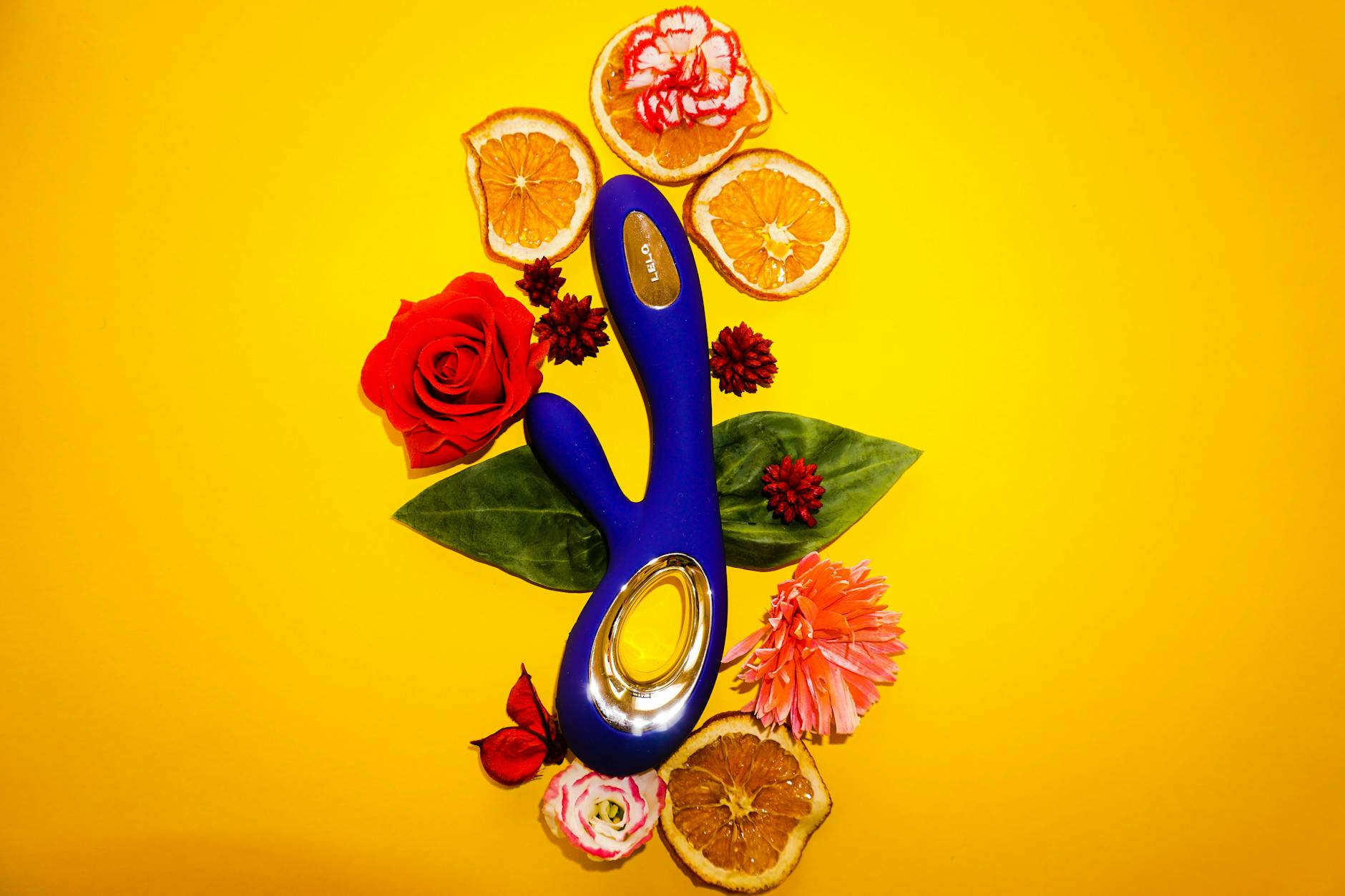
Let's start with what actually happens to your body after trauma
Trauma rewires your nervous system. Your body becomes hypervigilant. Touch that should feel good instead triggers alarm. The vagus nerve, which runs from your brain down through your body, gets stuck in protective mode. Pleasure gets filed away as unsafe information.
This is not a problem with your mind. It's not a character flaw. It's your nervous system doing exactly what it evolved to do: keeping you alive.
The good news? Your nervous system can learn again. And sometimes the right tool makes that relearning faster and safer than you'd expect.
Why sensation after trauma feels locked away
When you've experienced sexual trauma, your brain and body develop a protective reflex around anything sexual. Touch that once felt safe now triggers a cascade of warning signals. Your clitoral tissue might feel numb. Arousal might feel impossible. Sometimes even the thought of pleasure triggers shame or fear.
This is called post-traumatic sexual dysfunction. It's common. It's treatable. And it doesn't mean pleasure is gone. It means your system has learned to block it.
Therapists call this protective response "dorsal vagal activation." Your nervous system is bracing. It's protecting. And the only way out is to teach your body that sensation can be safe again. That requires something specific: stimulation that feels completely under your control, non-invasive, and physically different from what traumatized you.
How lemon vibrators fit into trauma recovery differently
Here's where clitoral suction toys like lemon vibrators matter. They're different from conventional vibrators in a way that matters neurologically.
Traditional vibrators are penetrative or external friction. After trauma, friction can feel invasive, even when it's technically consensual. It triggers the body's protective response. The sensation registers as pressure.
Clitoral suction works by a completely different mechanism. It's gentle, rhythmic, and it stimulates the clitoris without direct friction. Your body feels the difference. Your nervous system registers it as gentler, less invasive, more like a caress than a demand.
Most importantly? You control the intensity. You control the pace. The suction pattern on a lemon clitoral vibrator starts soft and can stay soft. There's no jackhammer sensation. There's no pressure. For people rebuilding trust in their own body, that control is everything.
The role of gradual nervous system reset
Healing from sexual trauma doesn't happen through willpower. It happens when you repeatedly experience something as safe. Your nervous system needs evidence. It needs to feel sensation that doesn't escalate without permission. That doesn't hurt. That stops when you want it to.
Using a lemon vibrator alone, at your own pace, gives your body that evidence. You're rewriting the message from "touch is dangerous" to "I can choose touch and it's safe."
Therapists trained in somatic experiencing call this "pendulation." You move toward sensation, then away from it, then toward it again. Each time, your window of tolerance expands a little. The nervous system learns the pattern: stimulus, control, safety.
With clitoral suction toys, that's easier because:
The sensation is novel enough to feel different from what harmed you. Your brain doesn't file it under "threat." The rhythm is consistent and predictable. Unpredictability triggers trauma responses. The control is complete. You're in charge of every variable. There's no pressure or penetration, which many trauma survivors associate with violation.
When and how to introduce this safely
If you're working with a trauma therapist, mention that you want to rebuild sensation and ask whether the timing feels right for you specifically. Trauma recovery is individual. There's no universal timeline.
When you're ready, these steps help:
Start with no expectation of orgasm. Your goal is not pleasure yet. Your goal is safety. Spend 10 minutes just holding the toy, turning it on and off, getting used to the weight and sound. Let your body acclimate without pressure. Use a lemon vibrator alone, in a space where you won't be interrupted and where you feel completely secure. No partners, no audience, no pressure to respond a certain way.
Start at the lowest setting. Pattern 1 on the Lem clitoral vibrator is barely there. It's a whisper. That's the right starting point. Your nervous system doesn't need intensity. It needs safety and repetition.
Stop whenever you feel tense or numb. You're not trying to push through anything. If your body goes into protective mode, that's feedback. Honor it. Close the toy. Try again in a few days. This is not a race.
Keep a simple journal. Note what patterns felt okay, what made you tense, whether your body responded differently than expected. Your nervous system is learning. The notes help you understand what it's trying to tell you.
The difference between vibration and suction for trauma recovery
Both work. But suction has advantages for trauma-sensitive bodies. Vibration can feel intense or overwhelming because it's constant movement across tissue. Suction is gentle, rhythmic, and it actually feels more like touch than stimulation.
Many trauma survivors report that conventional vibrators feel "too much" even on low settings. The sensation registers as invasive. Clitoral suction feels different. It feels like a gentle, consistent pull. Your nervous system interprets it as something closer to a caress than a machine.
That distinction matters. Your body's threat detection is running overtime already. You don't need a tool that feels aggressive. You need one that feels safe enough to let down your guard, gradually, on your own timeline.
What to do about shame or resistance
If you feel ashamed using a toy during trauma recovery, that's worth sitting with. Shame often comes from the trauma itself, not from the choice to heal. Trauma teaches you that pleasure is dangerous or dirty. Using a lemon clitoral vibrator is actually the opposite. It's an act of reclamation. You're telling your body: you deserve sensation that feels good, and you get to decide what that looks like.
Resistance is different from shame. Resistance usually means your nervous system isn't ready yet. That's fine. Don't push. Healing happens on the body's timeline, not your expectations. Work with a somatic therapist if you're stuck. They can help you understand what your nervous system is protecting you from and move at a pace your body can handle.
Building back to partnered intimacy (if that's the goal)
If you want to eventually have sex with a partner again, solo exploration with a lemon vibrator is actually foundational. You need to rebuild your own sense of what sensation feels like when you control it. You need to know your body again without the pressure of someone else's expectations.
Many people find that using a clitoral vibrator alone for several weeks or months before bringing a partner into that space makes the transition smoother. Your nervous system has already learned the signal: this sensation is safe, this tool is safe, this space is safe.
Then when you're ready to include a partner, your body has new evidence to work with. You can guide them. You can say what you want because you know. You've already remapped what pleasure looks like.
When to bring in professional support
If you've experienced trauma and you're struggling with any kind of sexual response, a trauma-informed therapist makes a difference. Not because something is wrong with you, but because healing is faster and more stable with professional guidance. Look for therapists trained in Somatic Experiencing, EMDR, or Gottman Method approaches to trauma recovery.
If numbness doesn't shift after a few weeks of gradual exploration, that's information for your therapist. It doesn't mean this won't work. It means your nervous system needs more support.
Healing from trauma is not about forcing yourself back to normal. It's about slowly, intentionally, teaching your body that it's safe again. A lemon vibrator can be part of that conversation.
People also ask
Can using a vibrator re-trigger trauma?
Possibly, if you move too fast or choose the wrong tool. That's why starting with a lemon clitoral vibrator on the lowest setting, alone, is safer than a conventional vibrator. The sensation is gentler. You control everything. If it does trigger something, stop. Talk to your therapist. The goal is never to push through trauma. It's to move toward healing at the pace your body can handle.
How long does it take to feel sensation again after sexual trauma?
It depends on the severity of the trauma, your nervous system's baseline reactivity, and the support you have. Some people notice shifts in a few weeks. Others take months. The timeline doesn't predict the outcome. Consistency matters more than speed. A few minutes a week of safe exploration, over time, rewires your nervous system more effectively than forced intensity.
Is solo use important, or can a partner be present?
Solo use is usually the best starting point. Without a partner's presence or expectations, your nervous system can focus entirely on learning that the sensation is safe. Once your body has that baseline, bringing a partner in becomes less triggering. They become part of the healing process rather than part of the threat detection.
What if I feel guilty about using a toy during recovery?
Guilt usually comes from the trauma itself, not from the tool. Trauma teaches you that pleasure is shameful or selfish. That's a lie your nervous system learned for survival. Reclaiming sensation is an act of healing. There's nothing guilty about it. If the guilt is overwhelming, work with a therapist. Shame responds to witness and compassion, both of which a good therapist can provide.
Can a lemon vibrator help if I don't have sensation at all?
Yes. Numbness is a protective response. It's your nervous system blocking sensation to keep you safe. The gentle, consistent stimulation of a lemon clitoral vibrator can gradually wake that tissue and the nerves connected to it. You might not feel anything for a few sessions. That's normal. Keep showing up, gently, and the sensation usually returns. Your body is learning it's safe to feel again.
Is there a risk of becoming dependent on the vibrator for pleasure?
No. Using a tool during trauma recovery is not dependence. It's rehabilitation. Your body is relearning. Over time, once your nervous system has the evidence it needs, you can explore sensation without the toy whenever you want. The tool is a bridge, not a destination.