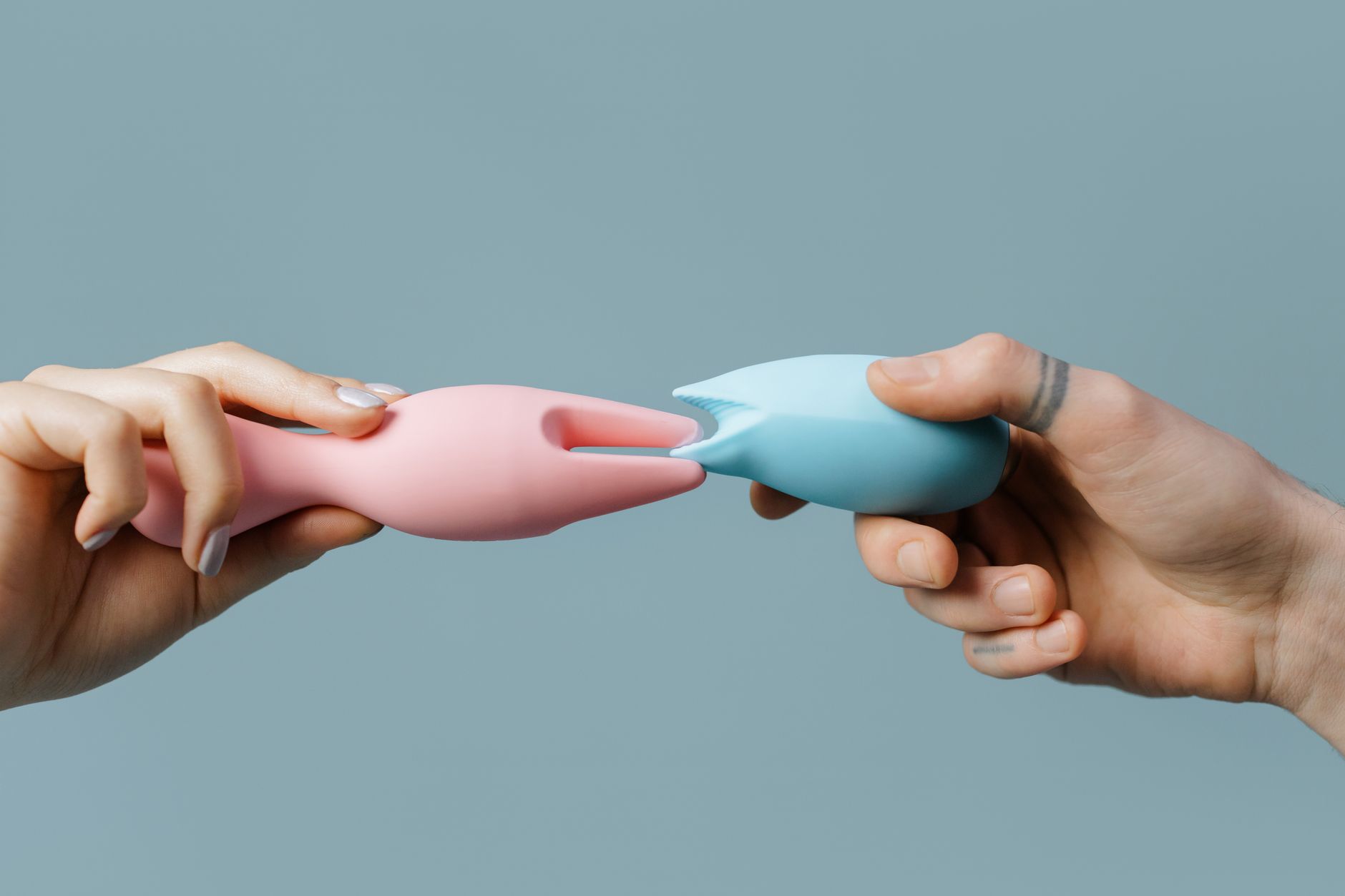
Here's what most people get wrong about vibrators
They treat them like a button you press and let run. But a lemon clitoral vibrator is more like an instrument. Your hands are the musician. The device amplifies what you're already doing, and when you learn to layer manual techniques with vibration, the intensity deepens in ways a vibrator alone never reaches.
I'm talking about using your hands actively while the vibrator is on. Moving it, angling it, pressing and releasing, combining patterns. Your touch directs the experience. The vibrator responds. That call-and-response is where real sensation lives.
Why hands-on control matters more than you think
Vibration alone is stimulus. But your hands are feedback. When you hold the device and move it yourself, you feel exactly what's happening. You notice what angle sends a wave up your whole body. You feel when you need to slow down or when you're ready for more. That proprioceptive feedback (knowing where your body is in space and how much pressure you're applying) is the thing that turns a nice sensation into an unforgettable one.
Hands-on control also gives you rhythm flexibility. You can pulse the vibrator on and off without stopping motion. You can move it in circles while it's running. You can hold it steady and let the vibration do the work, then switch to movement while the vibration continues. That variation prevents sensation from plateauing. Your nervous system stays engaged instead of adapting to one constant input.
Another thing: many people worry that adding hands means they're doing something "wrong" with the vibrator, or that the device isn't doing its job if they have to help it along. The opposite is true. A lemon clitoral vibrator is designed to amplify what you're already capable of. Your hands aren't a backup plan. They're the primary interface.
Starting with intention and position
Before you turn anything on, get comfortable. You need at least 15-20 minutes where you're not rushing. Position yourself so you have clear access to your body and your hand can move freely. Some people prefer lying on their back with a pillow under their hips for elevation. Others sit propped up against the headboard. A few prefer being on their side. There's no correct version. You want to be able to reach the device with your wrist relaxed, not strained.
Lubrication changes everything. Even if you think you don't need it, use a water-based lube anyway. It reduces friction between the device and your skin, which means the vibration transmits more cleanly and your hand can glide the toy smoothly across your body without the drag that kills momentum. A little goes a long way. You can always add more, but too much makes it slippery and harder to control.
Turn the vibrator on at pattern 1 or 2. Low intensity. Your goal right now isn't to chase an orgasm. It's to learn how this device feels when you're moving it consciously.
The hand techniques that amplify sensation
Slow circular motion
Hold the lemon vibrator lightly and trace slow circles around the clitoral area. Don't press hard. Let the vibration do most of the work. Your hand's job is to keep it moving smoothly, changing direction every 10-15 seconds. This technique builds sensation gradually and prevents numbness from a stationary vibrator.
What you're feeling: the vibration spreading outward as the device moves, creating a wave of stimulation rather than a concentrated point. Many people find this creates a full-body sensation instead of staying localized.
Pressure and release rhythm
Find a spot that feels good, then press the vibrator against your body for 3-5 seconds. Release pressure but keep the device in contact with your skin. Wait 2-3 seconds. Press again. You're creating a rhythm of intensity that your nervous system has to track, which keeps you engaged and prevents adaptation.
What you're feeling: a pulsing intensity that feels different from constant pressure. This works especially well if you have high sensation or if you've been using vibrators for a while and constant vibration feels flat.
Figure-eight movement
Trace a figure-eight pattern across the clitoral area, letting the lemon vibrator follow your hand's path. This combines movement with sustained contact, and the changing angles mean different nerve endings are being stimulated at different moments. It's rhythmic but never monotonous.
What you're feeling: continuous sensation with enough variation that your body doesn't predict what's coming next. This often leads to orgasms that feel different from stationary vibration because the buildup has more texture.
Teasing approach
Start with the vibrator far from the most sensitive area. Slowly move it closer over 30-60 seconds, letting anticipation build. This engages your nervous system before you ever touch the most reactive spot. When you finally move the device where you want it most, the sensation feels magnified because your body has been waiting for it.
What you're feeling: a psychological component layered on top of physical sensation. The teasing creates tension that intensifies pleasure when you finally deliver direct stimulation.
Building intensity without numbing yourself
One of the biggest mistakes people make is immediately turning the vibrator to the highest setting. That's the fastest way to plateau, because your nerve endings adapt to constant, maximum input. You get numb quickly and have to chase stronger and stronger stimulation to feel anything.
Instead, think of intensity as a landscape you're exploring. Start at pattern 1 or 2. Spend 3-5 minutes there with your hands moving deliberately. Notice what happens. Then move to pattern 3. Spend another few minutes. The key is giving your body time to experience each level before you escalate.
As you move to higher patterns, change your hand technique. If you started with slow circles, switch to figure-eights. If you were teasing, move to direct pressure. This combination of escalating vibration intensity plus changing hand movement means your nervous system stays surprised and engaged.
Many people find that they don't need the highest pattern to reach orgasm. In fact, how to use lemon vibrators when you want to slow down and extend pleasure often produces more intense, longer-lasting orgasms than rushing to the highest setting.
Hand techniques for different sensations
If you want more intensity
Hold the lemon vibrator steady against the most sensitive spot and use your other hand to apply pressure. Or use your hand to angle the device so the vibration hits at a steeper angle. The combination of your manual pressure plus the vibrator's motion creates a multiplier effect.
If you want to last longer
Keep moving the vibrator in patterns rather than holding it stationary. Use lower patterns. Focus on the entire clitoral area and surrounding tissue instead of zeroing in on one point. This spreads sensation across a larger area and delays the peak.
If you want deeper sensation
Move the vibrator slower and with more deliberate, heavier pressure. Think of it less as rapid movement and more as a massage that happens to be vibrating. You're using your hand to direct the device in a way that feels intentional, not random.
If you're feeling numb or disconnected
Switch hand patterns every 20-30 seconds. Go from circles to pressure to figure-eights to teasing. The novelty of changing technique helps your nervous system stay responsive. Many people find that varying technique when your body needs extra stimulation after hormonal changes brings back sensation that felt lost.
What to do with your other hand
Your non-dominant hand isn't sitting idle while the lemon vibrator does the work. It's creating additional sensation and context. Some options:
Touch other parts of your body. While your dominant hand holds the vibrator, use your other hand to touch your chest, neck, inner thighs, or anywhere else that feels good. This distributes arousal across your whole nervous system instead of concentrating it in one spot.
Provide counterpoint pressure. If the vibrator is moving in circles, your other hand can press steadily on a nearby area. This creates layers of sensation that feel richer than vibration alone.
Guide the vibrator hand. Your non-dominant hand can steady your vibrator hand, or gently adjust the angle. This feels more like partnered touch, which some people find deeply satisfying during solo exploration.
Hold yourself. Simply placing your other hand on your body, pressing gently, can intensify the sensation from the vibrator. You're creating closure and containment, which some nervous systems find calming and some find arousing.
When to pause and what happens next
If you're building toward orgasm, you'll notice a moment where your hand naturally wants to still. Your instinct will be to stop moving and just let the vibration finish the job. That's usually the right moment to pause your manual movement but keep the device in place. Let the vibrator carry you through the peak without adding motion.
After orgasm, if you want to continue, slow everything down immediately. Lower the pattern. Make your hand movements much slower and gentler. Your nervous system just peaked and needs a moment to recalibrate before you build again. Many people find that taking 1-2 minutes of very gentle stimulation allows a second or third orgasm to arrive without overstimulation.
Your hands turn a lemon vibrator from a tool into an instrument. That's where the real pleasure lives.
Why this matters for partnered exploration
If you're learning hand-vibrator techniques solo, you're building skills you can bring to partnered sex. When your partner knows how to hold the lemon clitoral vibrator and move it intentionally, they're no longer just handing you a device. They're engaged in the experience with you. They can feel your body's responses through the device and adjust. They can watch what makes you move, moan, or tense up. That kind of active participation transforms the whole dynamic.
When your partner suddenly wants to explore toys, teaching them these hand techniques makes the introduction feel collaborative instead of like someone's compensating for something missing. You're both learning a new language together.
Common questions about hands and vibrators
Does using my hands mean the vibrator isn't strong enough?
No. Combining hands with vibration is advanced technique, not a workaround. Professional sex educators teach this as the highest level of vibrator use, not the beginner version.
Can I hurt myself by moving the vibrator too much?
Unless you're applying extreme pressure (which you'll feel immediately and stop), no. Your body will tell you what's too much. Listen to that signal. Pain is information. Pleasure is what you're after.
What if my hand gets tired?
Take a break. You don't have to continuously move the vibrator. You can hold it steady for 30 seconds, move it for 30 seconds, rest for 15. Your hand isn't a machine. Rhythm and rest are part of the experience.
Does this technique work with all lemon vibrators?
Yes. Whether you're using a suction-based lemon vibrator or a traditional lemon clitoral vibrator, hands-on movement amplifies the effect. The principle is the same. Your hands plus the device equals deeper sensation.
How long should a session last if I'm using my hands the whole time?
As long as it feels good. Some people spend 30 minutes exploring different techniques. Some find what they need in 10 minutes. Neither is wrong. You're learning what your body actually wants, not performing for a clock.
Can I combine this with lubrication?
Absolutely. Water-based lubricant is your friend. It makes hand movement smoother and helps vibration transmit more effectively through your skin. Reapply as needed. It's not cheating. It's smart technique.
The real payoff
When you learn to move a lemon vibrator with intention instead of just letting it run, you shift from being a passive receiver to an active participant in your own pleasure. That distinction changes everything. You get to discover what actually works for your body instead of accepting whatever the device delivers on its own. You build confidence in your own touch. You learn your own rhythms and preferences with clarity.
And here's what I see most often in my work: people who take the time to develop hand techniques with vibrators find that their pleasure deepens not just with toys, but with partners too. You learn what you need. You can communicate it. You understand your own body well enough to help someone else pleasure you effectively. That's not a small thing. That's the foundation of a rich sexual life.