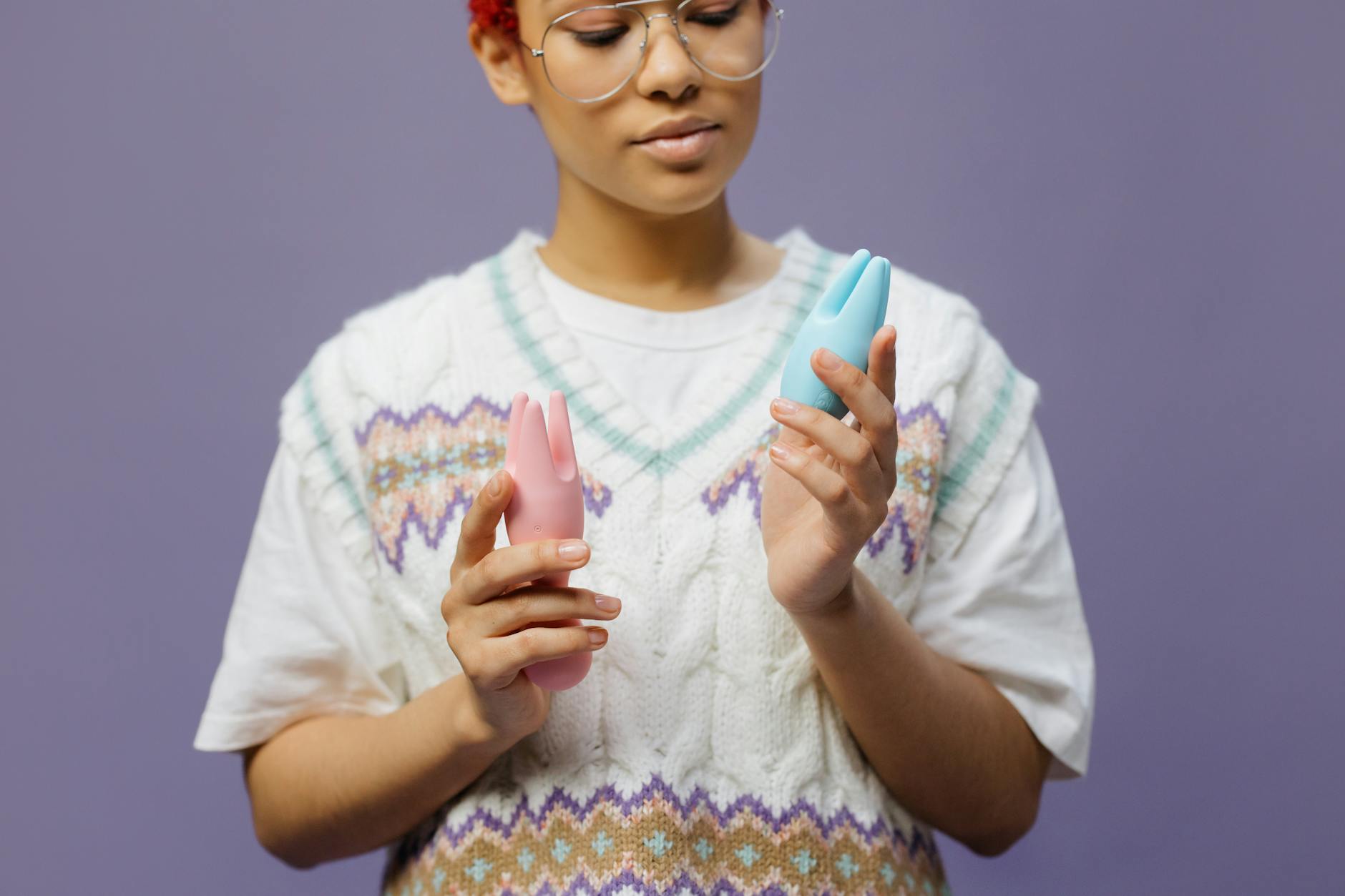
How to Use Lemon Vibrators When Arousal Builds Slowly With Age
Let's be real. Arousal used to show up faster. A text, a thought, ten seconds of the right touch. Now it takes fifteen minutes of direct stimulation just to feel a spark. And if you've mentioned this to a doctor, you probably got the hand wave: "That's just normal aging."
It is normal. And it's also fixable. The slowdown isn't about lost capacity. It's about changed plumbing, and changed plumbing responds better to a different kind of tool.
Why arousal actually slows down
Your body's not broken. It's recalibrated. Here's what happens physiologically after 40:
Blood flow to the genitals takes longer to ramp up. The clitoral glans gets slightly less sensitive to light touch but paradoxically more responsive to sustained, focused pressure. Vaginal lubrication still happens, but it starts later in the arousal cycle and requires more direct stimulation to trigger. Neurologically, the brain still processes pleasure the same way. The difference is in the delivery mechanism. Your nervous system needs more sustained input to register arousal.
This is where traditional vibrators miss the mark. Most bullet vibes rely on rapid oscillation to create sensation. But after 40, rapid oscillation often feels diffuse or even numb. You end up chasing the sensation instead of building toward it.
Lemon clitoral vibrators work differently. Suction-based stimulation mimics the sustained pressure that your body now needs. It's not a different kind of pleasure. It's the right kind of pressure for how your tissue has changed.
The advantage of suction over oscillation
Here's the practical difference. A traditional vibrator vibrates against the clitoral tissue at maybe 80 to 100 pulses per second. Your receptors register each pulse as a discrete event. After 40, those discrete events start feeling more like static and less like building sensation.
A lemon vibrator uses air-pulse technology. It creates a gentle suction rhythm that pulls blood into the tissue and creates a wave of pressure rather than a series of taps. For aging tissue, this wave is easier to feel and easier to build on.
Think of it like the difference between someone tapping your shoulder repeatedly versus holding their hand steady on your shoulder and applying gentle pressure. Both are touch. One builds. One doesn't.
Second, suction doesn't require the same level of friction as traditional toys. After 40, friction can start feeling either too intense or too numb depending on the day. Suction works through the skin barrier, which means thinner tissue and less direct abrasion. That's relevant because estrogen levels drop and tissue naturally thins.
How to actually use a lemon vibrator when arousal is slow
Timing matters more than it used to. Slow arousal doesn't mean absent arousal. It means you need to start earlier and give your body permission to take the time.
Set aside 20 to 30 minutes. Not because you're "supposed to." Because the goal is to build responsiveness, not rush through it. Start with the lemon vibrator at the lowest setting. Don't jump to pattern three because it feels stronger. The strength isn't the point yet. Consistency is.
Place the lemon vibrator against the clitoral area and keep it steady. One of the biggest mistakes I see is people moving it around constantly, trying to find the "right spot." After 40, your body needs to get comfortable with the sensation first. That takes maybe five minutes of stillness. Your receptors need to wake up to the stimulation.
Then, slowly increase the intensity. Not all the way. Increase it just enough that you feel a shift. Spend another five minutes there. This is when your body starts registering arousal. You might not feel a dramatic rush. You might feel a gradual warming, a shift in lubrication, a slight deepening of breath. That's the signal to stay.
Now you can vary the pattern. The lemon comes with multiple settings. Stick with one for two to three minutes before switching. Your body is building a map of what feels good. Jumping between patterns too quickly disrupts that.
This approach takes longer than traditional vibration because your nervous system is being rebuilt, not just stimulated. But once you establish the pathway, arousal gets faster.
Why solo exploration matters when arousal slows
Partner sex often tries to match an old timeline. Your partner still expects arousal to build in ten minutes. You know it doesn't. So either you fake responsiveness or you both end up frustrated.
Using a lemon vibrator solo first gives you data. How long does your body actually need now? Which patterns feel most responsive? What's the difference between what feels good and what builds momentum?
Once you have that data, communicating with a partner becomes concrete instead of vague. You're not saying "I need more time." You're saying "I need 15 minutes on the suction setting, then pattern two for intensity." That's actionable. Partners can work with that.
Solo exploration also rebuilds the neural pathway between arousal stimulus and pleasure response. Your brain has spent decades learning that fast oscillation equals arousal. Retraining it to respond to sustained suction takes repetition. That happens fastest when you're not managing another person's experience at the same time.
The medication and hormone factor
If you're on SSRIs, hormone therapy, or blood pressure medication, arousal slowdown might be amplified. These medications don't cause the slowdown on their own, but they can reduce the blood flow response that arousal relies on.
This is worth discussing with your doctor explicitly. Ask whether your current medication timing affects arousal. Sometimes shifting when you take medication relative to when you have sex helps. Sometimes switching to a different medication class helps. Don't assume the slowdown is just age.
Similarly, if you're perimenopausal or post-menopausal, estrogen decline is a real factor. And here's the thing most doctors don't mention: topical estrogen creams don't just improve lubrication. They improve nerve sensitivity. If you're struggling with arousal slowdown and you're in menopause, a low-dose topical cream can make a real difference.
The mental side is real
Honestly though, the physical changes matter less than you'd think. The mental shift matters more.
At 25, arousal was something that happened to you. Your body responded automatically. By 45, you've learned that arousal doesn't just show up. You've had years of being touched in ways that didn't work. You've internalized the message that your body should respond faster. So now when it doesn't, you panic, which kills arousal completely.
Using a lemon vibrator deliberately gives your brain permission to slow down. You're not waiting for arousal to magically appear. You're actively building it. That's psychologically different. It's the difference between feeling broken and feeling like you're engaging in a skill that's worth your time.
Talk to yourself differently about this. "My arousal is slower" is a neutral fact. "My body doesn't work anymore" is a story. They feel different. One opens doors. One closes them.
When to adjust your approach
If you're using a lemon vibrator consistently and arousal is still not building after four or five weeks, something else might be going on.
Does pain appear during use? That's a sign of tissue thinning that needs professional attention. A gynaecologist trained in menopause medicine can assess whether you need topical estrogen or other treatments.
Is arousal building but stopping partway through? That sometimes signals pelvic floor tension. Your muscles are clenching, which cuts off blood flow. Pelvic floor physical therapy rewires that response.
Are you more aroused some days than others? That's probably hormonal variation. Tracking when arousal builds easier can help you understand your pattern. Some people find arousal easier mid-cycle (if they still have cycles), or at certain times of the month even after menopause.
FAQ: Slow arousal and lemon vibrators
Why does arousal slow down specifically after 40?
Blood flow to the genitals becomes less automatic with age due to changes in vascular responsiveness. Estrogen supports blood vessel function and tissue sensitivity. As estrogen declines, the arousal cascade takes longer to initiate. This is normal aging of the nervous system, not a sign of decreased capacity for pleasure.
Can using a lemon vibrator actually speed up arousal over time?
Yes. Consistent stimulation with focused, sustained pressure rebuilds the neural pathway between sensory input and arousal response. Your nervous system learns to recognize and respond to that specific type of stimulation more quickly. Many people report that after four to six weeks of regular use, arousal begins building faster even with non-vibrator stimulation.
Is slow arousal after 40 the same thing as low desire?
No. Desire is wanting sex. Arousal is the physical response when sex is happening. You can have strong desire but slow arousal, or you can desire sex but struggle with the physical transition. Lemon vibrators address slow arousal. Low desire is different and often requires conversation, partner dynamics, or medical evaluation.
Should I use a lemon vibrator alone or with a partner when arousal is slow?
Start alone. Understanding your own arousal pattern first makes partnered sex easier and removes pressure. Once you know what works, you can introduce it with a partner. Many couples find that starting with solo exploration actually improves partnered sex because communication becomes specific instead of frustrated.
Does using a vibrator make natural arousal slower?
No. This is a common worry and it's not supported by evidence. Using a more efficient tool doesn't retrain your body to need it. It actually does the opposite. Rebuilding arousal responsiveness with a lemon vibrator makes non-vibrator touch feel more responsive too because you've activated dormant neural pathways.
What if my partner doesn't understand why arousal is slower?
Show them the physiology. Arousal slowdown after 40 is not personal. It's not a sign of decreased attraction or desire. It's a change in how blood flow and nerve sensitivity work. Once your partner understands it's a mechanical change, not an emotional one, they can stop taking it as rejection and start treating it as information. Many couples find that using a lemon vibrator together actually deepens intimacy because it removes the pressure to perform.
The bottom line
Arousal doesn't disappear after 40. It changes. And changed arousal responds better to sustained, focused pressure than to rapid oscillation. That's why lemon clitoral vibrators work so well at this life stage. They're not compensating for lost pleasure. They're delivering pleasure in the way your nervous system now processes it.
Your capacity for arousal and orgasm is still there. You're just using a different tool to access it. That's not a loss. That's an adaptation. And honestly, most people find that once they stop fighting the slower timeline and start working with it, arousal becomes deeper and more satisfying than it was at 25.
Ready to rebuild? Start with a single session of 20 to 30 minutes using the lowest setting. Notice what shifts. That's your baseline. Everything else builds from there.
Questions about how to approach this with a partner or how to choose the right lemon vibrator for your sensitivity level? Let's talk.