
How to Use Lemon Vibrators With Partners When Libidos Don't Match
Let's be real. Mismatched libidos are one of the most common relationship friction points, and almost nobody talks about it directly.
One partner is ready to go three times a week. The other wants sex once a month. One initiates constantly and gets rejected. The other feels pressured. Resentment builds quietly, then explodes over something completely unrelated, like who didn't do the dishes.
Here's what I've seen work in my practice: lemon vibrators aren't a replacement for your partner. They're a pressure release valve that actually lets you both have more sex, more pleasure, and less anger.
The libido mismatch paradox
Most couples handle mismatched desire in one of three damaging ways. The higher-desire partner grits their teeth and has less sex. The lower-desire partner feels guilty and performs duty sex. Or they stop touching at all.
None of these create connection. They create resentment that leaks into everything else.
What actually works is separating two very different needs. Your partner's desire to connect with you sexually. And your own desire for pleasure, independent of that connection.
Lemon vibrators, especially the lemon clitoral vibrator design, are brilliant for this because they're fast, reliable, and completely yours. You're not waiting for your partner to be in the mood. You're not negotiating arousal timing. You're meeting your own need on your schedule.
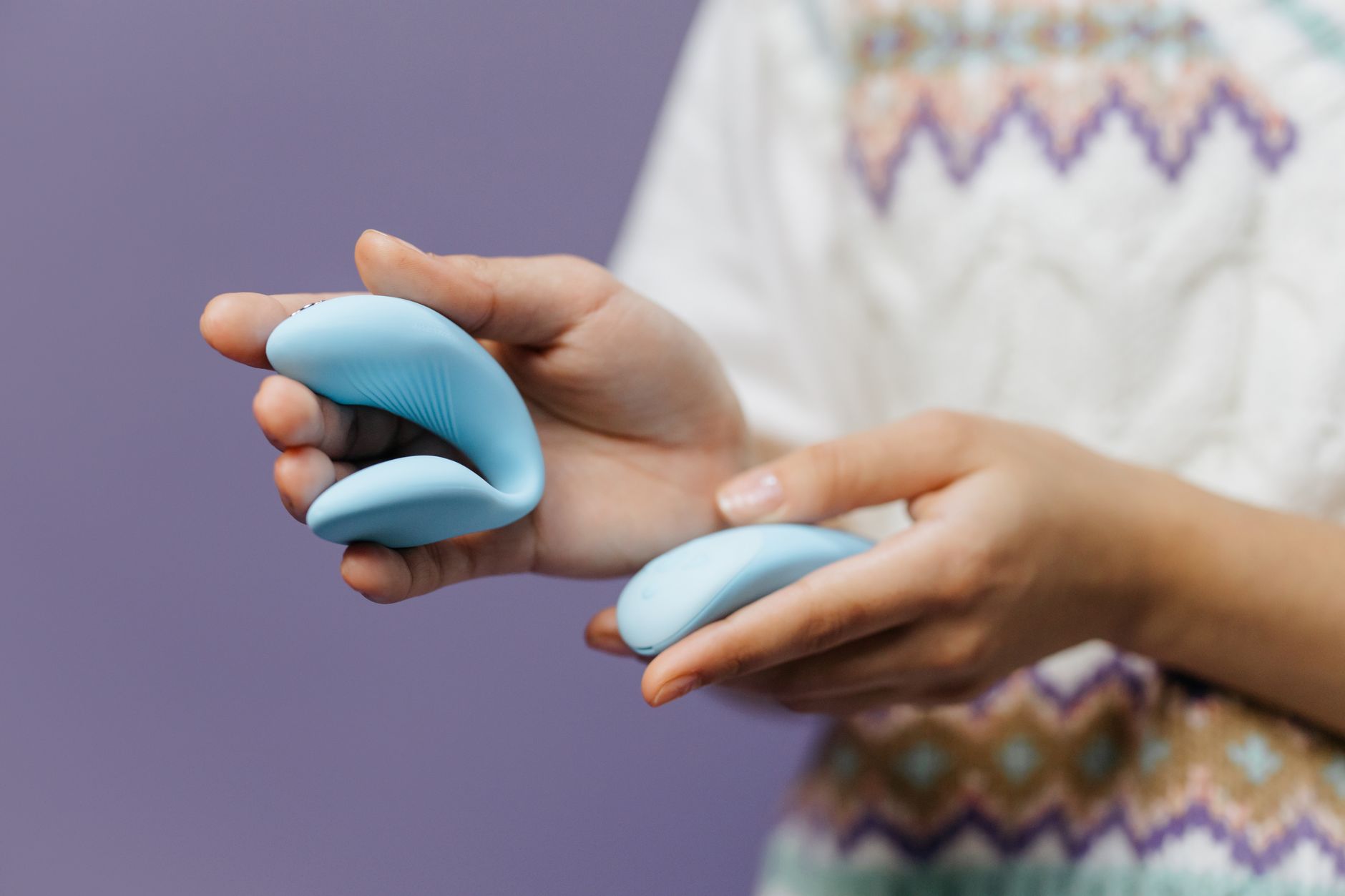
Photo by cottonbro studio on Pexels
Why this actually improves sex with your partner
When you're not desperate or resentful, you show up differently in the bedroom. The lower-desire partner isn't feeling hunted. The higher-desire partner isn't starving. You can have actual choice.
I've had couples where the lower-desire partner starts initiating more after their partner gets a lemon vibrator, because suddenly the pressure lifts. When you know your partner can take care of themselves, you're free to want sex because you want it, not because you're balancing a scorecard.
The higher-desire partner often reports that partnered sex feels better, not worse. Because it's not their only outlet anymore, it becomes something they're choosing instead of something they're begging for.
You're also modeling something crucial: that pleasure is normal, that you deserve it, that taking care of your own needs makes you a better partner.
How to bring it up without making it weird
This is the part that stops most people. They're afraid saying "I want to use a lemon vibrator" sounds like a rejection.
It's not. It's an upgrade.
Start with honesty about the actual problem. "We have different desire levels, and I don't want either of us feeling resentful." Not "I need this because you don't satisfy me." The frame matters entirely.
Then frame it as independence, not replacement. "I'd like something I can use on my own timeline. Not instead of us. Just so I'm not waiting around frustrated." Some partners will be relieved. Some will want to participate. Let that unfold.
If your partner is insecure, don't pretend the vibrator will make you want them more. Be honest. "This is about managing my own pleasure. It has nothing to do with how I feel about you." Most people respect that directness more than reassurance.
When to use it (and when not to)
Timing matters. If your partner is the lower-desire one, using a lemon vibrator right before they want to sleep when you want to be touched sexually creates more distance, not less.
The sweet spot is usually mornings or afternoons when you have solo time. You get your release. You're less tense. You show up to partnered time less needy.
For some couples, the lem vibrator becomes foreplay. The lower-desire partner watches or helps. It's erotic for them without the pressure of full sex. They're participating without performing.
For others, it's completely separate. Your partner is reading. You're in the bathroom. It takes five minutes. Nobody's waiting. Nobody's performing.
Find what works for your actual relationship, not what sounds right in theory.
The higher-desire partner's role
If you're the one who wants more sex, your job is to let go of the idea that your partner's self-pleasure means you're not enough.
You're not. Their lemon clitoral vibrator isn't a statement about you. It's a tool for autonomy.
What you can do: stop initiating every single time. Create actual space for them to want you. Paradoxically, this makes them want you more.
You can also ask to be involved. Some partners love watching. Some love using the vibrator on their partner. Some want to be in the room. There are infinite options between "completely separate" and "always together."
But the core job is acceptance. Their pleasure doesn't owe you anything.
For the lower-desire partner
Using a lemon vibrator might feel like it's admitting you have a problem. You don't. You just have a different rhythm.
What this actually does is take pressure off. You're not obligated to want sex on your partner's schedule. You can explore what actually turns you on without performing for anyone.
Sometimes lower desire is about not feeling safe to be selfish during sex. You're managing your partner's experience instead of your own. A lemon vibrator is permission to be selfish in the best way.
You might also discover that your desire isn't low. It's just a different shape than your partner's. You want less frequency but more intensity. You want more emotional connection first. You want to initiate instead of respond.
Using your own vibrator gives you that information without obligation.
The conversation to have (not just once, ongoing)
Mismatched libidos need ongoing conversation, not one big talk.
Start with data. "How often do you actually want sex? Be honest." "How often do I?" "What's our actual rhythm when there's no resentment?" Sometimes the answer surprises people.
Then logistics. "When would you use this? What feels good to you?" "Do you want me involved or not?" These questions are unsexy but important.
Then check in. After a few weeks, "Is this helping? Do you feel less pressure?" The point isn't whether you're having more sex. It's whether you're both feeling more choice.
If it's not working, adjust. Maybe you need a lemon vibrator that lets your partner feel involved more. Maybe you need completely separate pleasure time. Maybe you need to reconnect emotionally first before fixing the sex.
When mismatched libidos signal something bigger
Sometimes low desire isn't about frequency. It's about safety, resentment, or medical stuff like hormonal shifts or medication side effects.
If introducing a lemon vibrator doesn't help at all, that's data. It might mean you need to talk to a therapist about what's actually going on. Is your partner angry? Are you? Is there a health issue? Is the relationship fundamentally not working?
A vibrator can reduce friction. It can't fix a broken foundation. Know the difference.
FAQ: Mismatched Libidos and Lemon Vibrators
Will using a lemon vibrator make my partner want me less?
No. The opposite usually happens. When your partner isn't desperate or resentful, they're more available to you. When you're not starving, you can actually enjoy sex instead of just needing it. The higher-desire partner especially tends to report better sex once the pressure lifts.
What if my partner sees me using a lemon vibrator as cheating?
That's a values conversation, not a tool problem. Some relationships include partner approval for solo pleasure. Some don't. You need to know your partner's boundaries before buying a toy, not after. If they do see it as infidelity, a vibrator isn't the issue. Trust is. You might need a conversation or a therapist to figure out what's actually bothering them.
Can we use a lemon clitoral vibrator together if we have mismatched libidos?
Absolutely. Some couples find that using a lemon vibrator during partnered sex helps the lower-desire partner get there faster, which means less performance pressure. Others use it as foreplay, so the lower-desire person is already aroused before anything else happens. Talk about what would feel good.
My partner has low desire and I'm worried a vibrator will replace me entirely.
That worry makes sense. But the reverse is usually true. When your partner isn't forced to have sex they don't want, they actually want you more. The vibrator is competition for obligation, not love. If it feels like it's replacing you, that's a sign the relationship needs attention beyond the vibrator.
How do I know if mismatched libidos are a dealbreaker?
Start by asking whether you're both willing to work on it. If the higher-desire partner demands sex they're not getting and refuses to help the lower-desire partner meet their own needs, that's contempt. If the lower-desire partner shames their partner for having more desire, that's contempt too. Contempt is the actual dealbreaker. A vibrator might help you both move away from it.
Should we use a lemon vibrator in the bedroom together or separately?
There's no right answer. Some couples find watching incredibly erotic. Some find it helps the lower-desire partner relax into wanting more. Others need completely separate pleasure time to avoid making it about comparing. Ask your partner what sounds exciting or manageable. Then try it. Then adjust. Preference is not permanent.
What actually fixes mismatched libidos
Lemon vibrators help. So does talking honestly. So does taking pressure off. So does acknowledging that your partner's desire is real even if it doesn't match yours.
What doesn't fix it is pretending the problem doesn't exist or expecting one person to change their baseline. You can't will yourself to want sex more. You can't will yourself to want it less.
What you can do is stop treating desire mismatch like a failure. It's just information. And once you have the information, you can build a sex life that works for both of you instead of resentment that poisons everything else.
Start with a conversation. Then give yourself time to adjust. Then check in again. Mismatched libidos are one of the easiest problems to solve if you're willing to be honest about what you actually need.